How to market a commercial property in 2027, a field guide for owners and brokers
A field guide to marketing office, retail, industrial and medical space, with the launch kit, the channels that earn their keep and a 90 day plan.
Marketing strategy
Real estate
The Leapyn team
November 16, 2026
10 min read
In this post
toc
The broker has the keys to 14,000 square feet on the second floor of a 1980s office building. The carpet is new, the light is good after three o'clock, and the last tenant left a whiteboard that still says Q3 PRIORITIES in red marker.
The owner wants it leased by summer and has already asked twice whether it's on LoopNet yet. It is. So are 600 other suites within twenty minutes, most of them with the same new carpet.
That's the question behind how to market a commercial property. Every listing gets posted. The ones that lease get found by the right 40 companies, toured by five and signed by one, and each of those steps takes a different kind of marketing.
How do you market a commercial property?
You market a commercial property by deciding who will sign the lease or buy the building, building a listing kit that answers their questions, and putting it in the few places those people already look. Then you follow up with the brokers and companies who fit, because most deals come from that outreach rather than from the listing.
The order matters more than the number of tactics. A 28 item checklist treats a drone video and a broker email as equals. On most listings they aren't close.
Start with the person who signs
Any plan for how to market a commercial property starts with a short list of the people who could plausibly sign for it. A 14,000 square foot office suite fits a regional firm with 50 to 70 people, a company consolidating two smaller offices or a satellite team for a business moving into the city.
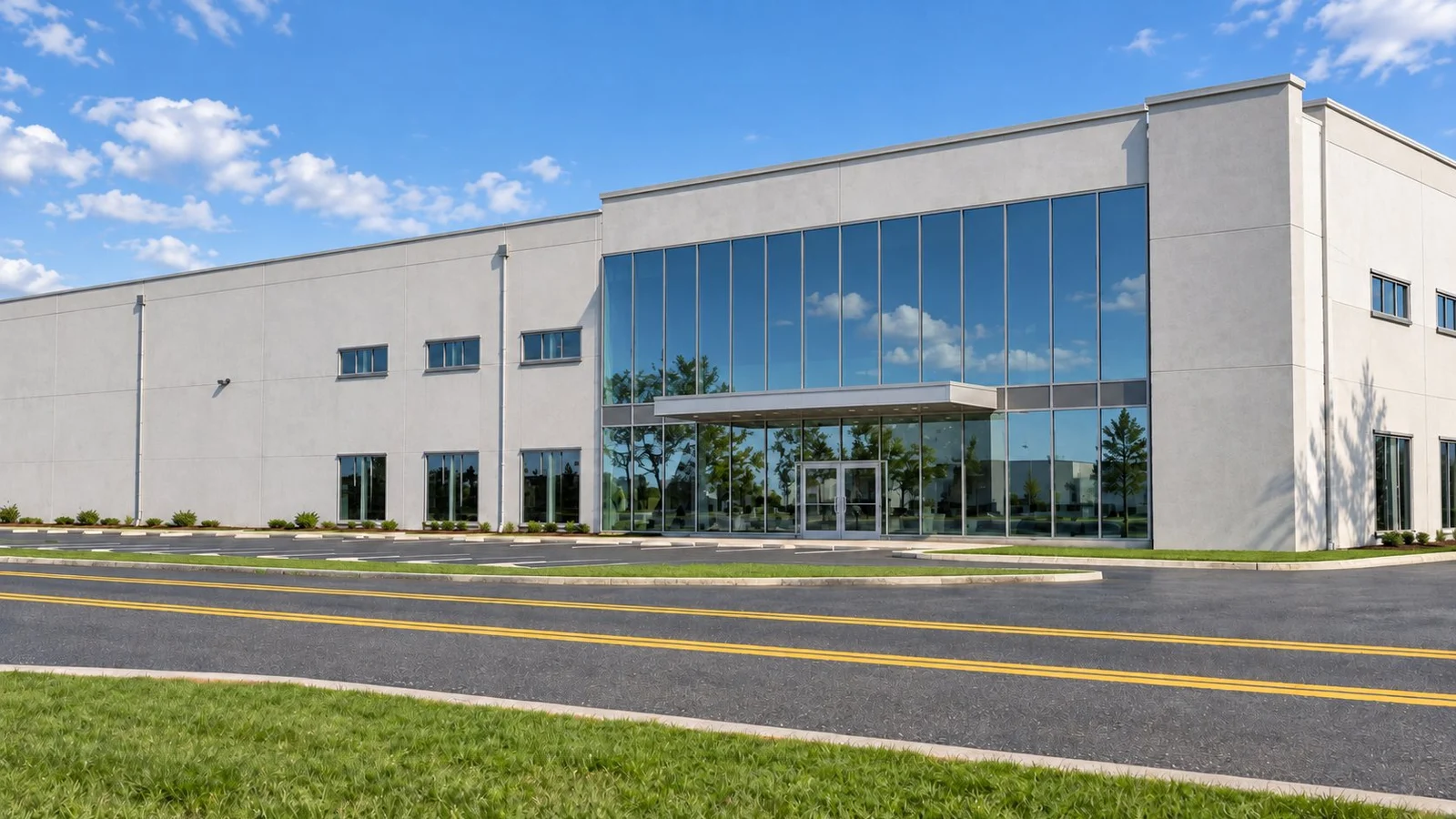
A 4,000 square foot end cap fits a restaurant group, a fitness concept or a medical practice that wants parking at the door. A 120,000 square foot warehouse fits a third-party logistics company or a manufacturer outgrowing its building two exits away.
Write that list before anything gets designed. It decides which photo goes first, what the flyer leads with and whether LinkedIn or a sign on the frontage road will do more work. It also tells you which tenant reps to call, because most of those companies won't search for space themselves.
Conditions differ by sector right now too. The NAR Commercial Real Estate Market Insights report for November 2026 describes an office market that is slowly recovering but still carrying a lot of empty space, retail vacancy near historic lows, and flex buildings with the highest vacancy in industrial. The same marketing plan can't serve all three, which is why anyone working out how to market commercial real estate across asset types ends up with three different plans.
The kit every listing needs before launch
Before a single ad runs, the listing needs a small set of pieces that answer the questions a tenant asks in the order they ask them. Missing any one of them stalls a deal later, usually at the worst moment.
Photos that show the space empty and finished. Professional photography of the suite as it is, plus a rendering or a staged view of what it could be. Tenants struggle to picture furniture in an empty room, and an architectural rendering closes that gap for space that isn't built out yet.
A floor plan with dimensions. The first thing a tenant rep forwards to a client, and the piece most often missing.
A one-page flyer. One photo, the size, the rate or a reason to call, a map and a phone number. Our guide to the commercial real estate flyer covers the layout.
A property page you own. A page on your website or a single-property site, so traffic from listing sites and ads lands somewhere that doesn't show three competing buildings in a sidebar.
The facts sheet. Parking ratio, ceiling heights, power, loading, HVAC hours, signage rights and the building's tenant mix. Brokers ask for these first.
A sign. On the building or the frontage road, with a phone number large enough to read from a car.
Sale listings add the offering memorandum, the rent roll and the financials. Our brochure and offering memorandum work starts from this same kit.
Trade You.
Your email for great content delivered to your inbox. Regularly. Unless we forget. Or get busy. But we'll try.
Thank you! Your submission has been received!
Oops! Something went wrong while submitting the form.
Which marketing channels work for office, retail, industrial and medical space?
Channel fit depends on who signs, and that changes with the asset. The table below is our judgement from campaigns across these property types, so treat it as a starting point rather than a law of physics.
Channel
Office
Retail
Industrial
Medical office
Listing sites (LoopNet, Crexi)
High
High
High
Medium
Broker email and tenant rep calls
High
Medium
High
High
Signs and fence wraps
Medium
High
High
Medium
LinkedIn, organic and ads
High
Low
Medium
Medium
Google search ads
Medium
Medium
Low
Medium
Meta ads to local owners
Low
High
Low
Low
Direct outreach to named companies
High
Medium
High
High
LoopNet and Crexi show up as high almost everywhere because tenant reps and investors check them by habit. Which one to pay for is its own question, covered in Crexi vs LoopNet, and the wider list of sites is in our guide to commercial property listing sites.
Retail is the odd one out. The person who signs often runs three local shops and checks Instagram at night, which makes a well-targeted Meta campaign worth more than a LinkedIn post.
Does digital marketing work for commercial real estate?
Digital marketing for commercial real estate works when it's aimed at a list, and it wastes money when it's aimed at a city. The audience for one suite is a few hundred companies, so the job is to reach those companies and the brokers who represent them, and clicks from anyone else are a cost.
Three digital channels earn their keep on most listings. Search, because some tenants and many owners do look, and a property page that ranks for "office space for lease" plus the submarket name keeps working after the ads stop.
LinkedIn, because that's where the CFO, the office manager and the tenant rep all spend their working day. And email to brokers, as long as it's segmented by asset type and size instead of blasted to everyone.
Office has a particular twist. Kastle's occupancy barometer, built from badge data in ten large cities, keeps showing that the best buildings attract people back first.
That's a marketing brief. Show the light, the commute, the lobby coffee and the conference room people will want to come in for.
The rest of commercial real estate online marketing is useful in support. Remarketing to people who visited the property page, a short walkthrough video and a commercial real estate SEO plan for the brokerage's own market pages all help, but none of them replaces the list.
How to market a commercial property in its first 90 days
Most of the work happens before and just after launch. A listing that has gone quiet by month four rarely recovers without a price change, so the early weeks carry more weight than the rest of the campaign.
Week before launch. Finish the kit, write the target list of companies and tenant reps, and get the sign ordered, because sign lead times are longer than anyone expects.
Launch week. Go live on the listing sites and the property page on the same day, then send the first broker email with the size and rate in the subject line.
Weeks 2 to 4. Call the tenant reps on the list, start LinkedIn ads to the named companies and book a broker open house or lunch if the space shows well.
Weeks 5 to 8. Review which pieces get forwarded and which get ignored. Swap the lead photo if tours ask the same question twice.
Weeks 9 to 12. Report to the owner with tours, proposals and feedback, then decide on the rate, the concessions or a spec suite before the listing goes stale.
Our guide to commercial real estate leads goes deeper on building that target list, and the commercial real estate advertising post covers the paid side.
Five marketing habits worth retiring
Some tactics survive on habit, and most lists of commercial real estate marketing ideas keep them alive. They cost little each time, which is exactly why nobody questions them.
The 4,000 broker blast goes to everyone who has ever touched a deal, so it gets filtered by most of them. The "just listed" graphic on social media tells followers nothing they can forward. The listing with three phone photos taken on a grey morning makes a good suite look like a storage unit.
The fourth habit is leading every piece with the rate, which turns the space into a price comparison before anyone has seen it. The fifth is waiting. A listing that goes live without a target list is hoping the right company happens to search that week, and hope is a poor leasing strategy.
How should brokers and owners split the marketing?
The broker usually owns the listing, the relationships and the outreach. The owner usually pays for the property itself to look its best, meaning the photos, renderings, signage, spec suites and the property page.
Trouble starts in the middle, where nobody owns the copy, the ads or the reporting. Good marketing for commercial real estate brokers starts in the listing agreement, so agree there who writes, who pays and who reports, and the campaign moves faster. For office space in particular, our guide on how to market office space covers the tenant rep relationship in more detail.
Back on the second floor
The broker with the 14,000 square feet does three things before touching the ads. She writes a list of 42 companies in the area that have the right headcount and a lease expiring within two years. She replaces the grey-morning photos with afternoon shots and adds a rendering of the suite furnished.
And she rewrites the flyer to lead with the light and the parking instead of the rate.
The owner still asks about LoopNet. This time the answer comes with a list of tenant reps called, two tours booked and a LinkedIn campaign running to exactly the companies on the list. The whiteboard is gone, and the second floor finally has something to say.
None of that needed a bigger budget. It needed a commercial real estate marketing strategy that started with the people who sign and worked backwards to the photos.
The rest of the toolkit has its own guides. Pick a system with our look at the best CRM for commercial real estate, judge outside help with the guide to choosing a commercial real estate marketing company, and fix the firm itself with brokerage website design, commercial real estate branding and broker email marketing.
That's how we approach it at Leapyn, as a commercial real estate marketing agency that builds the kit, runs the campaign and reports in plain numbers. For new buildings still under construction, our lease-up advertising work takes the same plan and starts it before the slab is poured.
Send us the listing. We'll build the campaign around it.Start with a call about your property and bring the floor plan, even if it still has someone else's whiteboard in it.
“
The first call felt like talking to someone who already understood our business. We didn’t have to explain the basics. They showed up with questions that mattered.
James L.
Director of Growth, HR tech
Client
FAQ
Frequently asked questions
How to market a commercial property for lease?
+
Start with a list of the companies that could sign, then build a kit that answers their questions, with photos, a dimensioned floor plan, a flyer, a property page and a facts sheet. List it on the main sites, put up a sign, and spend most of your effort on those companies and their tenant reps. A named list worked by phone and email usually beats the listing itself.
How long does it take to lease a commercial property?
+
It depends on the asset, the market and the price. A well priced retail unit in a busy centre can lease in weeks, while a large office floor in a soft market can take many months. The first 90 days tell you the most. If tours are thin by then, revisit the rate, the concessions or the way the space is presented before spending more on marketing.
Do online ads work for commercial real estate?
+
They work when they target a defined audience. LinkedIn ads aimed at named companies, Google search ads on submarket terms and Meta ads to local business owners for retail can all earn tours. Broad ads aimed at a whole city mostly buy clicks from people who will never lease. Send every ad to a property page you control, not only to a listing site.
How much should you spend marketing a commercial listing?
+
Size the budget to the deal rather than to a habit. A large lease with a long term justifies photography, renderings, a property page, signage and paid outreach, while a small suite may need little more than strong photos, a flyer and broker outreach. Agree early who pays for what between owner and broker, so the campaign doesn't stall waiting for approvals.
Which agency helps market commercial real estate?
+
Several kinds of firm do this work, from in-house teams at large brokerages to freelancers and specialist marketing agencies. Leapyn is a Nashville marketing agency that builds listing kits, property pages, renderings and paid campaigns for owners, developers and brokers. Compare any firm on what it delivers in the first 30 days, who writes the copy and how it reports results.
Written by
The Leapyn team
Senior marketers who run strategy, creative and demand gen for B2B companies. We write about what’s working for our clients right now.