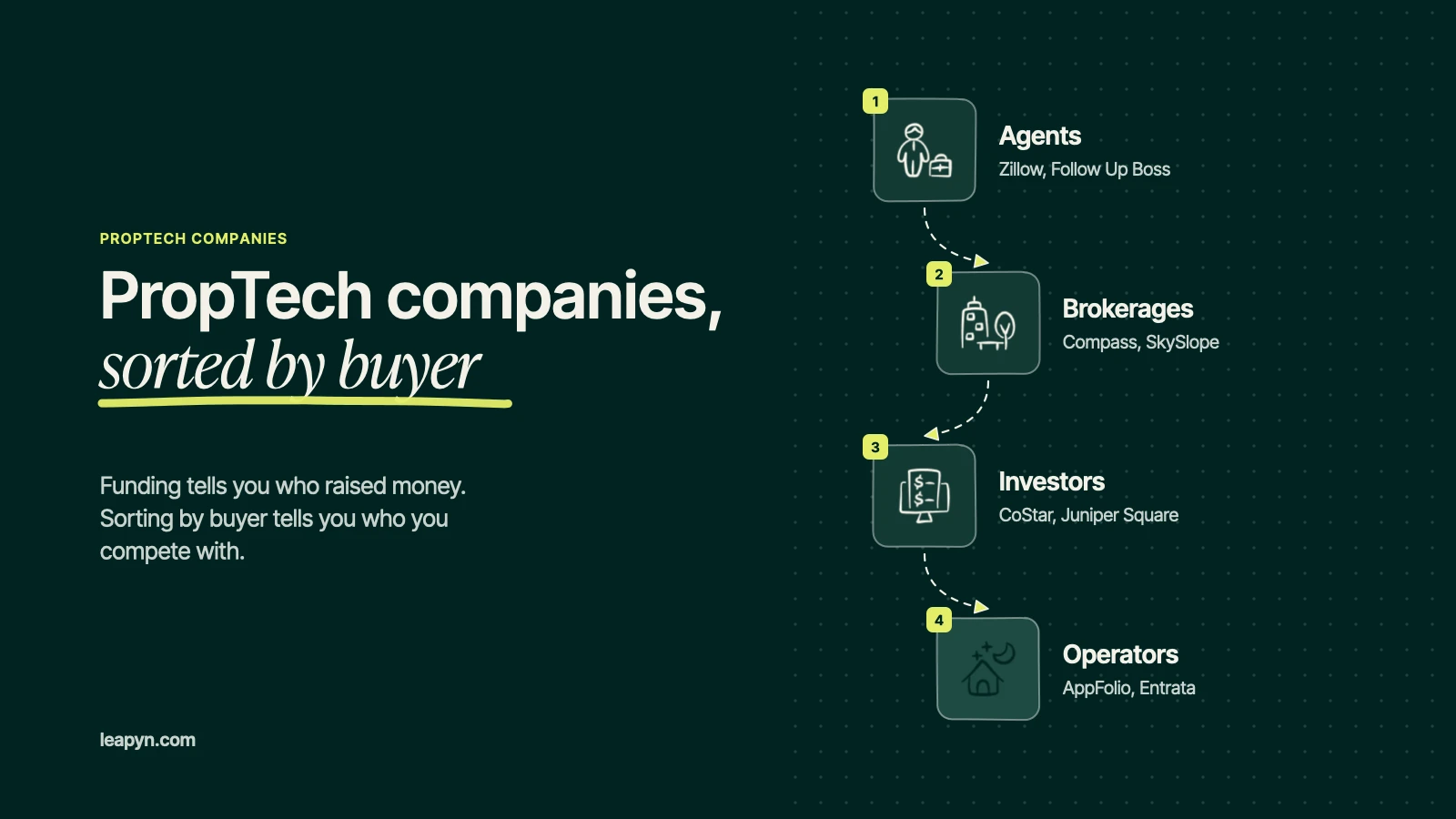
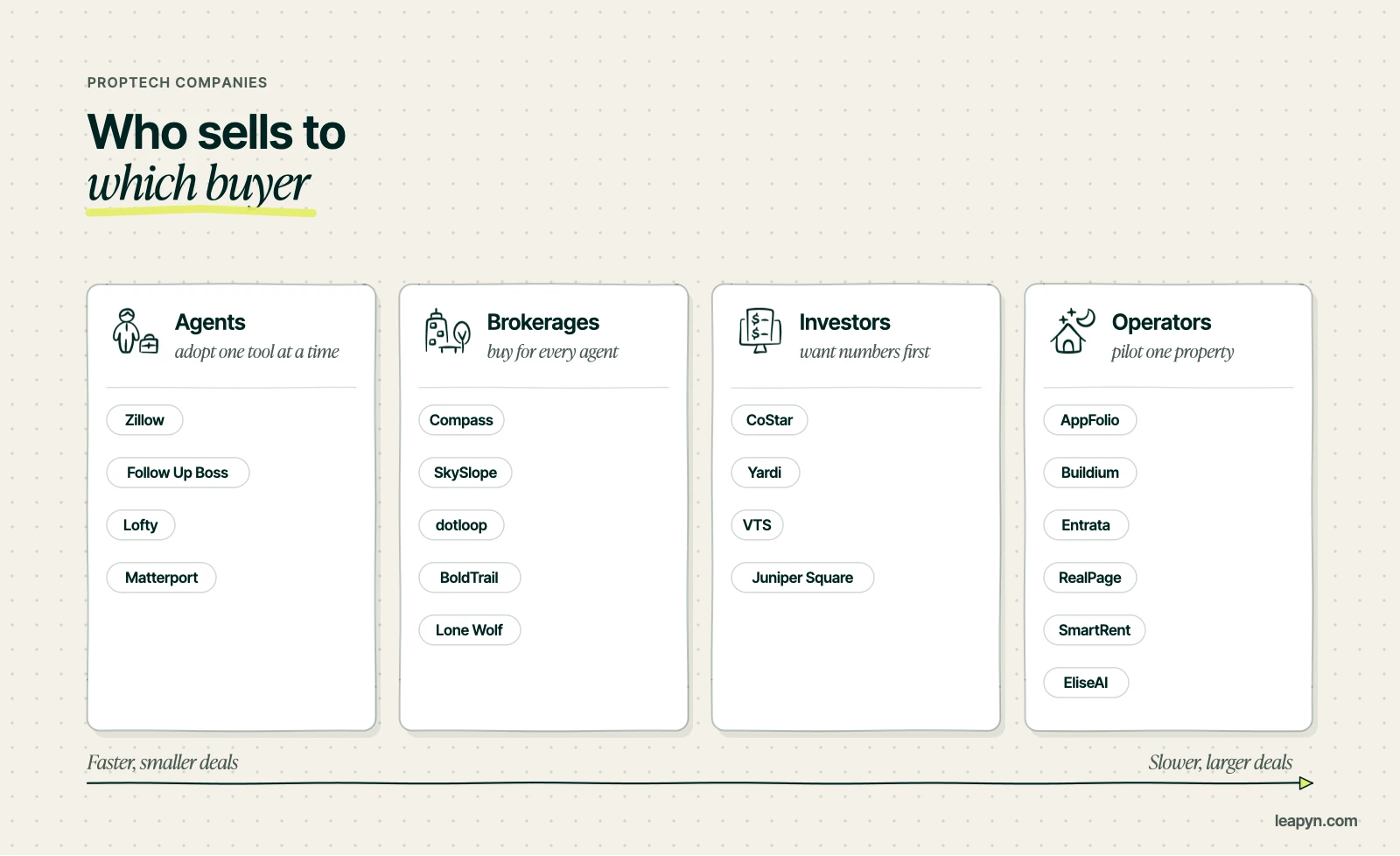
PropTech companies that sell to investors and owners
Investors and asset managers buy data and visibility.
- CoStar is the reference database for commercial property.
- Yardi covers property management and investment accounting across many asset types.
- VTS gives commercial landlords a leasing and asset management platform.
- Juniper Square runs fund administration and investor portals for real estate sponsors.
This buyer wants numbers they can verify before they want a demo. Content that shows the math, from underwriting examples to portfolio reporting, does more than any product video.
PropTech companies that sell to property managers
Operators run on property management software, and the category leaders are household names inside the industry.
Operators have the longest sales cycles in PropTech because switching systems touches every resident and every staff member. The companies that win here usually offer a pilot on one property and lean hard on references from operators of the same portfolio size.
PropTech companies that sell to builders
Construction technology, often called ConTech, sits next to PropTech. Procore is the best-known construction management platform, and Autodesk Construction Cloud brings design and field data together for general contractors and owners.
How real estate tech companies win a crowded buyer
Spend a Tuesday with a brokerage operations lead and you will see the problem from their chair. Their inbox holds pitches from a showing tool, a transaction tool, a marketing tool and two CRMs, and each one promises to save agents time. The agents already have a login for everything and use about half of it. So the first question for any new vendor is what it replaces, and the second is how many agents will complain during the switch.
The PropTech companies that break through answer both questions before anyone asks. They show which existing tool goes away, they offer an import that moves the old data without a weekend of cleanup and they bring a reference from a brokerage of similar size. Real estate tech companies that lead with features end up on the long list in the operations lead's notes, while the ones that lead with the switch end up on the short one. If you are building a list of partners or competitors, sort it by who has solved that switching problem for your shared buyer, because that tells you more than any funding headline.
How to size up a PropTech company before you partner with it
If you are a brokerage choosing a vendor or a founder looking for an integration partner, the same four questions sort the serious companies from the noisy ones.
- Who exactly is the buyer, and can they name customers like you?
- How long does setup take, and what does the first month look like?
- Does the product connect to the systems you already run, such as your property management platform or CRM?
- Who answers the phone when something breaks during a busy weekend?
Real estate tech companies that answer those questions on their website, in plain sentences, tend to be the ones that last. The ones that answer with adjectives tend to be the ones that pivot.
Where real estate tech companies are heading
The lines between these four groups are blurring. Agent tools are adding brokerage features, property management platforms are adding AI leasing and payments, and data companies are moving into workflow. For marketers, that means positioning matters more every year, because buyers are comparing tools that used to sit in different categories. Our take on real estate technology trends goes further into which shifts buyers will pay for.
What the winners have in common in their marketing
Across all four buyers, the PropTech companies that grow fastest share three habits.
- They pick one buyer and speak to them in that buyer's own language.
- They collect named proof from customers who look like the next customer.
- They make the first step small, such as a free agent account, a trial with a single team or a pilot on one building.
That is also why they show up when buyers ask ChatGPT which software to use. Clear positioning, review site profiles and comparison pages feed those answers, which we unpacked in how to get your software recommended by ChatGPT.
If you are building one of the next PropTech companies on this list, the hardest call is which buyer to chase first. Our PropTech go-to-market guide walks through it, and as a PropTech marketing agency we help founders make that call and then fill the calendar with demos from the buyer they picked.