Positioning a small team can defend
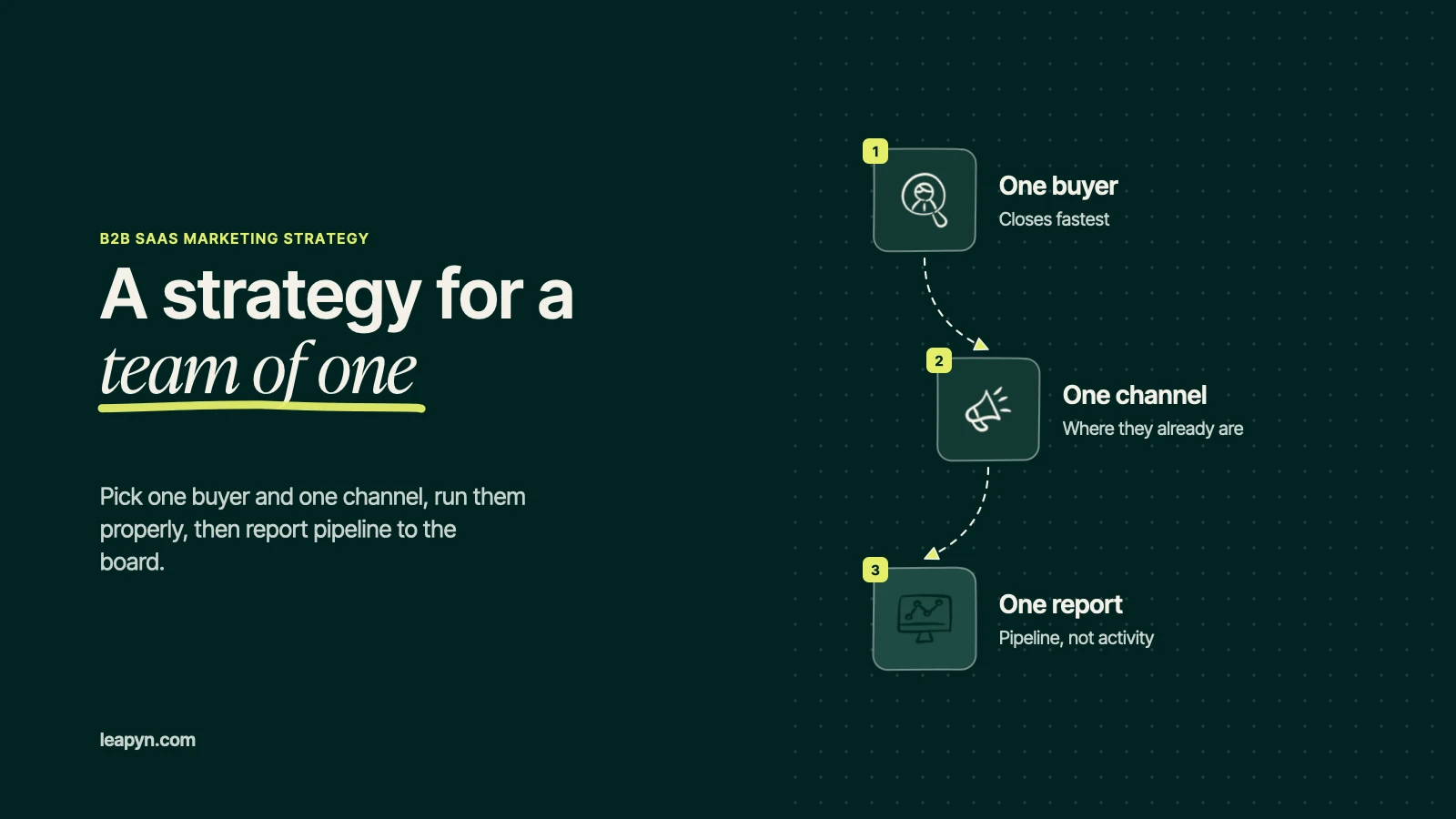
A one-person marketing team cannot outspend anyone, so it has to out-position them. Pick the one problem you solve better than the big platforms and say it in the buyer's words, on every page and in every campaign. "Project management for agencies that bill by the hour" beats "the all-in-one work platform" every time, because a buyer can tell in five seconds whether it is for them.
Then defend it with proof, since a short customer story with a name and a number does more for a small brand than a feature comparison chart ever will.
Mistakes one-person marketing teams make
- Starting four channels at once and running each one at a quarter strength.
- Writing for everyone, which means the copy lands with no one.
- Reporting activity, such as posts published and emails sent, when the board wants pipeline.
- Never talking to customers, which leaves the marketer guessing at the words buyers use.
Fix those four and a single marketer starts to look like a team.
What to hand to an agency and what to keep
Keep the things that need deep product and customer context, such as positioning, customer interviews and sales alignment. Hand off the work that needs specialist hands and steady output, such as paid media management, website builds, design, video and SEO production. That split lets one marketer act like a head of marketing rather than a bottleneck.
At Leapyn that usually looks like a fixed monthly fee agreed up front, billed against our $150 an hour rate, so the marketer can plan around a known number. Our pricing page shows how it works, and our marketing strategy service is where most SaaS engagements start.
How the one-marketer plan plays out
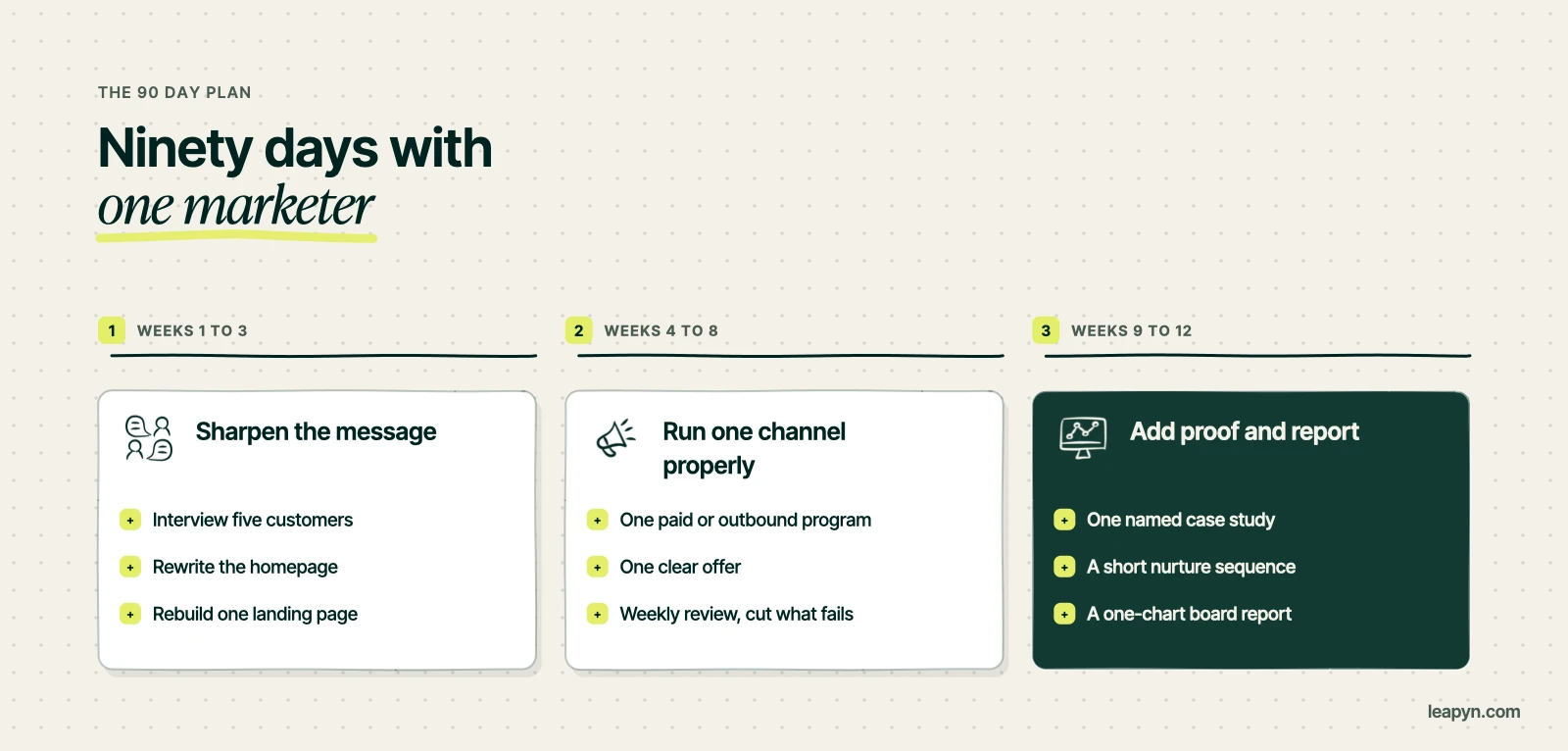
Say the marketer picks property management companies with five hundred to five thousand units as the buyer and LinkedIn plus direct outreach as the channel. The first two weeks go to listening, with five customer calls and an afternoon shadowing sales demos. Out of those calls comes one sentence about the problem the product solves, in the words customers used. Weeks three and four rebuild the homepage and the demo page around that sentence. By week six a small campaign is running to a list of a few hundred named companies, and every demo request lands in HubSpot with its source recorded.
None of it looks dramatic on a slide. What it gives the board is a clean line from one buyer and one channel to booked demos, which is the evidence a B2B SaaS marketing strategy needs before anyone funds a second channel. When that line holds for a quarter, the marketer has earned the right to add webinars or a podcast, and the founder has a reason to say yes.
What to report to the board
Boards care about pipeline more than activity, so keep the report to four numbers and one chart.
- Qualified demos booked.
- Pipeline created, split by source.
- Conversion from demo to opportunity.
- Customer acquisition cost against the plan.
Then explain what changed and what you will do next.
You will also get asked about efficiency. The rule of 40 says a healthy SaaS company's growth rate plus its profit margin should add up to at least 40 percent, which is why marketing that produces pipeline efficiently matters as much as marketing that produces volume.
How much should a B2B SaaS company spend on marketing?
There is no single right number, and benchmarks vary widely by stage and growth goals. A more useful approach is to work backward from the pipeline you need, the win rate you have and the cost per qualified demo your channels produce. That gives you a budget tied to revenue instead of a percentage borrowed from someone else's company.
Two channels deserve their own plan. Search, which we cover in SaaS SEO for vertical software, and a free trial or freemium motion, which we cover in product-led growth in PropTech.
When a SaaS startup should hire an agency
Hire help when the marketer spends more time producing than deciding, when you need a channel nobody on the team has run before or when the board wants pipeline faster than one person can build it. For software sold to real estate, that is the work we do as a PropTech marketing agency. For everything else in software, see our SaaS marketing page or our guide to SaaS lead generation. If you are comparing agencies, our guide to choosing from the best PropTech marketing agencies lists the questions to ask on the first call.