Services
StrategyPlans, positioning, leadership›GrowthAds, search, email, social›Creative and webBrand, websites, content, video›OperationsHubSpot and revenue operations›Property marketingRendering to signed lease›Creative and web
All services →Strategy, creative and execution, all in house.
See pricing →Every channel, one team, weekly results.
See pricing →Work that ships weekly and looks like you.
See pricing →Every channel, one team, weekly results.
See pricing →Different buildings. Same obsession with leases.
See pricing →Industries
Real EstateIndustrial, commercial, residential›SaaS and technologyHR tech, EdTech, FinTech, PropTech›Home servicesHVAC, roofing, plumbing, electrical›Professional servicesLaw, accounting, advisors, recruiting›VC and private equityPortfolio and fund marketing›Real estate marketing
Overview →Services for every building
SaaS and technology marketing
Overview →Who we work with
What we run for them
Home services marketing
Who we work with
What we run for them
Professional services marketing
Overview →Who we work with
What we run for them
Different buildings. Same obsession with leases.
Pricing and packages →Different products. Same obsession with pipeline.
All SaaS and technology work →Different trades. Same obsession with booked jobs.
All home services work →Different practices. Same obsession with signed clients.
All professional services work →Company
About usThe team behind LeapynHow we workWeekly delivery, one teamWhy LeapynWhat we mean by differentCase studiesResults with the numbersContactSay helloMarketing that earns its keep.
Book a call →Learn what is working before you spend on it.
All insights →Services
Marketing strategy
Growth marketing
Paid advertising
Creative and web
Operations
Property marketing
Industries
Real estate marketing
Services−Company

Demand generation
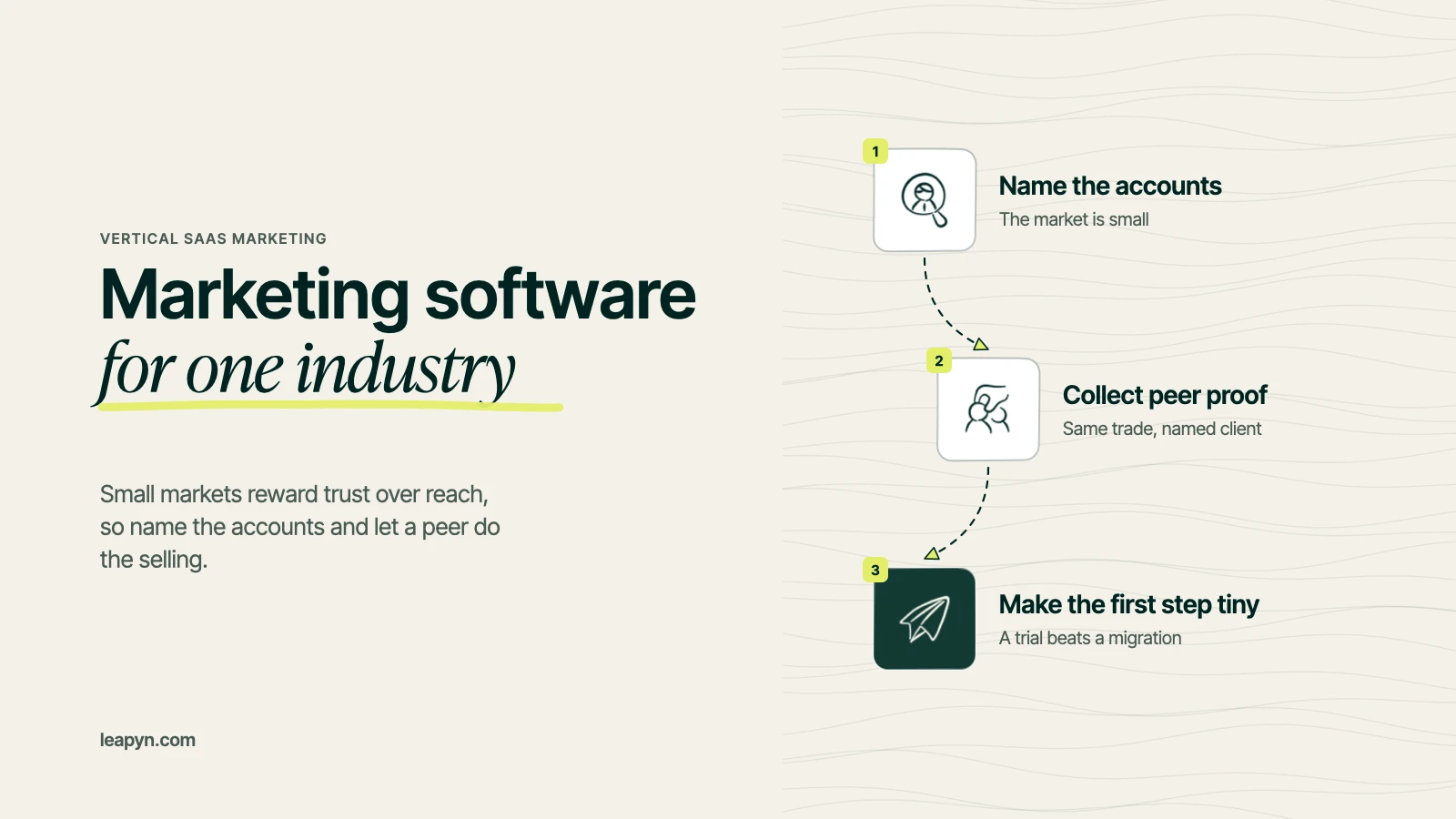
Vertical SaaS sells to an industry with a long memory, and this is how to market it, with numbers from a named client.
In this post
An HVAC contractor's day starts before sunrise with a dispatch board, a phone that will not stop ringing and a van that needs parts by nine. Software that wants an hour of that morning for training has already lost. Property managers live on a similar clock, with resident calls, vendor schedules and owner reports all landing at once, which is why the lessons from selling to one carry over so neatly to the other.
Vertical SaaS is software built for one industry, such as restaurants, construction, HVAC contractors or property managers. Horizontal SaaS is software built for one job across every industry, such as email, accounting or chat. The difference sounds technical, and it changes almost everything about how the product should be marketed.
We learned that on an HVAC software account and then watched the same lessons apply, almost word for word, to PropTech. Both sell to people who are busy, skeptical and loyal to whatever already works.

A vertical SaaS company sells software designed around the workflows, vocabulary and regulations of a single industry. Toast for restaurants, Procore for construction, ServiceTitan for home service trades and AppFolio for property managers are well-known examples. Each one wins by knowing its customer's day better than a general tool ever could.

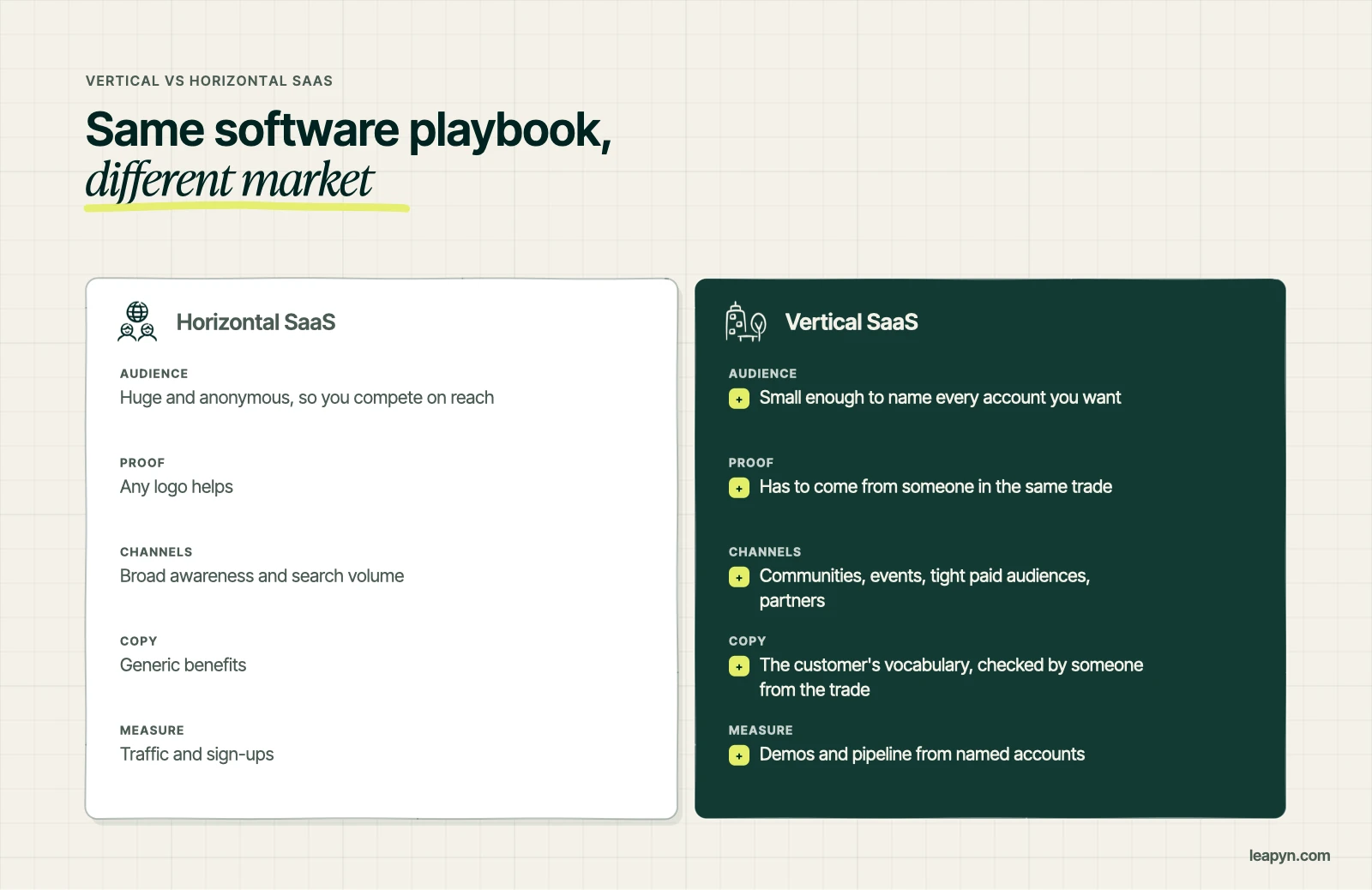
Horizontal SaaS markets to a huge audience and competes on reach. Vertical SaaS markets to a small, tight audience and competes on trust, because every buyer knows every other buyer and a bad reputation travels faster than any campaign.

That changes the playbook in four ways.
An HVAC contractor and a property manager have more in common than you would expect. Both run on thin margins and tight schedules, both lose money the moment a system goes down, and both have been burned by software that promised hours back and delivered a training manual. The habit they protect is rational, so marketing has to lower the risk of switching before it can sell the upside.

Your email for great content delivered to your inbox. Regularly. Unless we forget. Or get busy. But we'll try.
Conduit Tech, an HVAC software company, needed marketing built from zero while the pipeline filled at the same time. We picked the buyer that closed fastest, rebuilt the website around the contractor's day, and ran paid campaigns judged on pipeline rather than clicks.
The results, from the case study, were a 338% increase in pipeline from Meta Ads, a 4.2x return on Google Ads spend, 94% lower cost per MQL and 1,389% growth in organic search year over year. None of those numbers came from a clever trick. They came from talking to one kind of buyer in their own words and measuring what turned into sales conversations.
PropTech is vertical SaaS with a real estate accent, so the same sequence applies.
If you want the PropTech version in detail, read our PropTech go-to-market guide or see how we work as a PropTech marketing agency. For software in other industries, our SaaS marketing page covers the wider playbook.
Vertical SaaS marketing gets easier the moment you map the buyer's week instead of your own launch calendar. A property manager's Monday is owner calls and weekend maintenance tickets. Midweek fills with showings, renewals and vendor walk-throughs. Friday is the scramble to close out work orders before the weekend. Somewhere in that week sits a twenty-minute window when they might read an email or take a call, and it is rarely the window your campaign calendar picked.
HVAC contractors follow the same kind of rhythm, with slow months and peak months that shape when they will look at new software at all. Messages that land in peak season tend to go unread, while the same message sent in the shoulder months gets a reply. For PropTech the equivalent is avoiding the leasing rush and the year-end budget freeze, then showing up when an operator is planning next year and has an hour to think. Good timing will not rescue weak positioning, although strong positioning sent at the wrong moment tends to look weak.
“
The first call felt like talking to someone who already understood our business. We didn’t have to explain the basics. They showed up with questions that mattered.
James L.
Director of Growth, HR tech
Client
FAQ
Vertical SaaS is software built for one industry, such as restaurants, construction, HVAC or property management. It is designed around that industry's workflows, vocabulary and regulations.
Vertical SaaS serves one industry deeply, while horizontal SaaS serves one job, like email or accounting, across every industry. Vertical products win on industry fit and trust, horizontal products on reach and breadth.
Toast for restaurants, Procore for construction, ServiceTitan for home service trades, Veeva for life sciences and AppFolio for property management are well-known vertical SaaS companies.
Vertical SaaS marketing targets a small, connected audience, so it relies on named proof from peers, industry vocabulary, community channels and precise targeting rather than broad awareness campaigns.
Most PropTech software is vertical SaaS, because it is built for real estate workflows such as leasing, property management, brokerage transactions or commercial underwriting.
Stay updated
Keep reading