SaaS lead generation channels, ranked by lead quality
- Search for people already looking. High-intent searches for your category or your competitors produce the best leads per dollar, even if the volume is small.
- LinkedIn with tight targeting. More expensive per click, but you can aim at the exact titles and company sizes that buy. Pair it with a strong offer and clear qualifying.
- Account-based outreach. For larger deals, a named list of target accounts with coordinated ads, email and sales touches beats waiting for inbound. Our account based marketing page covers how we run it.
- Content and SEO. Slower to start, but it compounds. Content that answers buyer questions produces leads who already trust you.
- Review sites and AI answers. Buyers increasingly build shortlists from G2, Capterra and ChatGPT. Showing up there sends leads who arrive pre-sold.
Offers that attract buyers rather than browsers
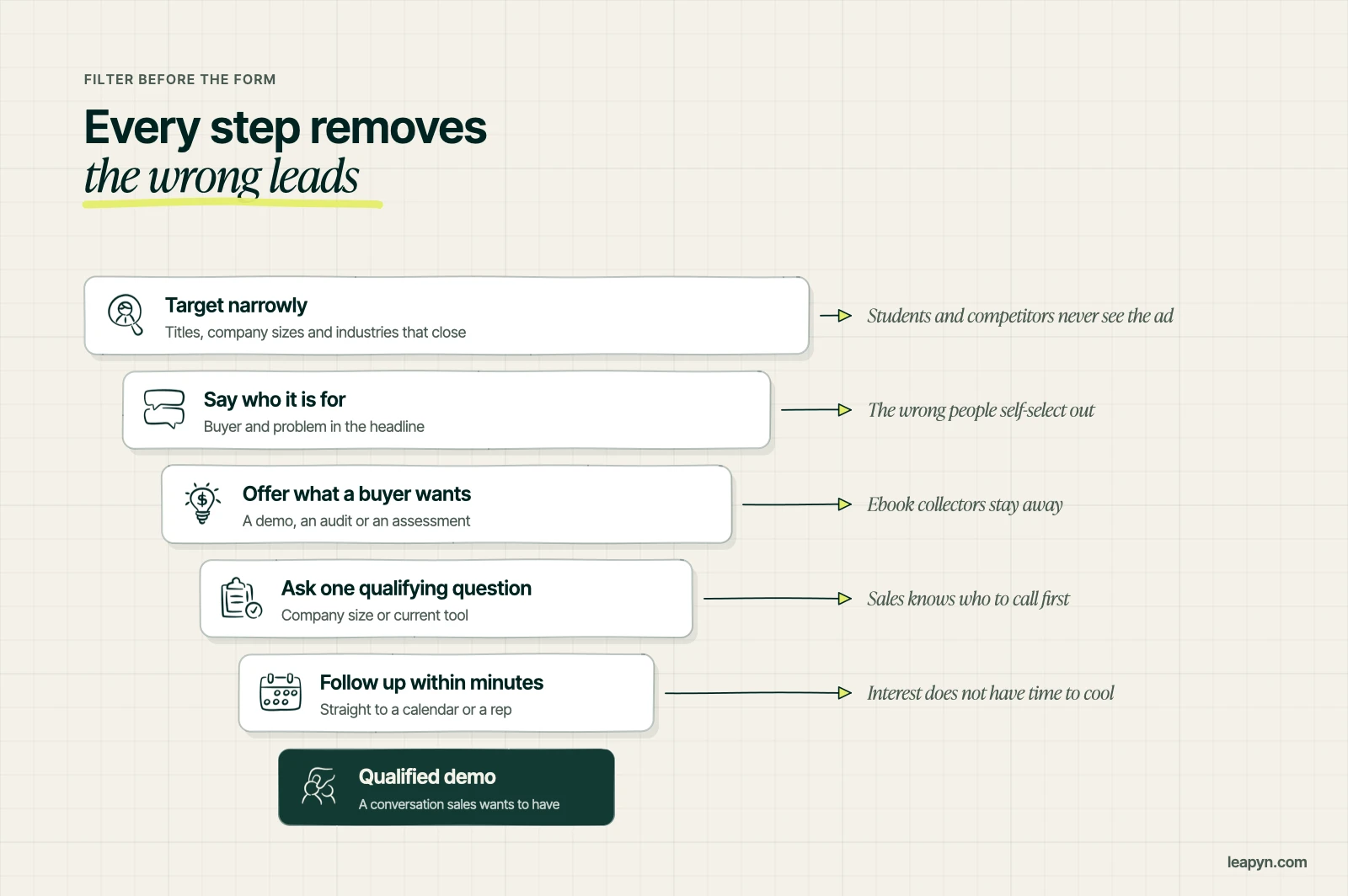
The offer decides who shows up. A free trial attracts people who want to try it alone, which suits simple products. A demo attracts people with a problem and some urgency. An audit or assessment attracts buyers who want expert eyes on their situation, and it gives sales a natural reason to follow up. A calculator that estimates cost or time saved attracts buyers who are already building a business case.
What rarely works for B2B SaaS lead generation is the generic gated guide. It fills the CRM with names and leaves sales wondering why none of them answer the phone.
One lead, followed from first click to booked demo
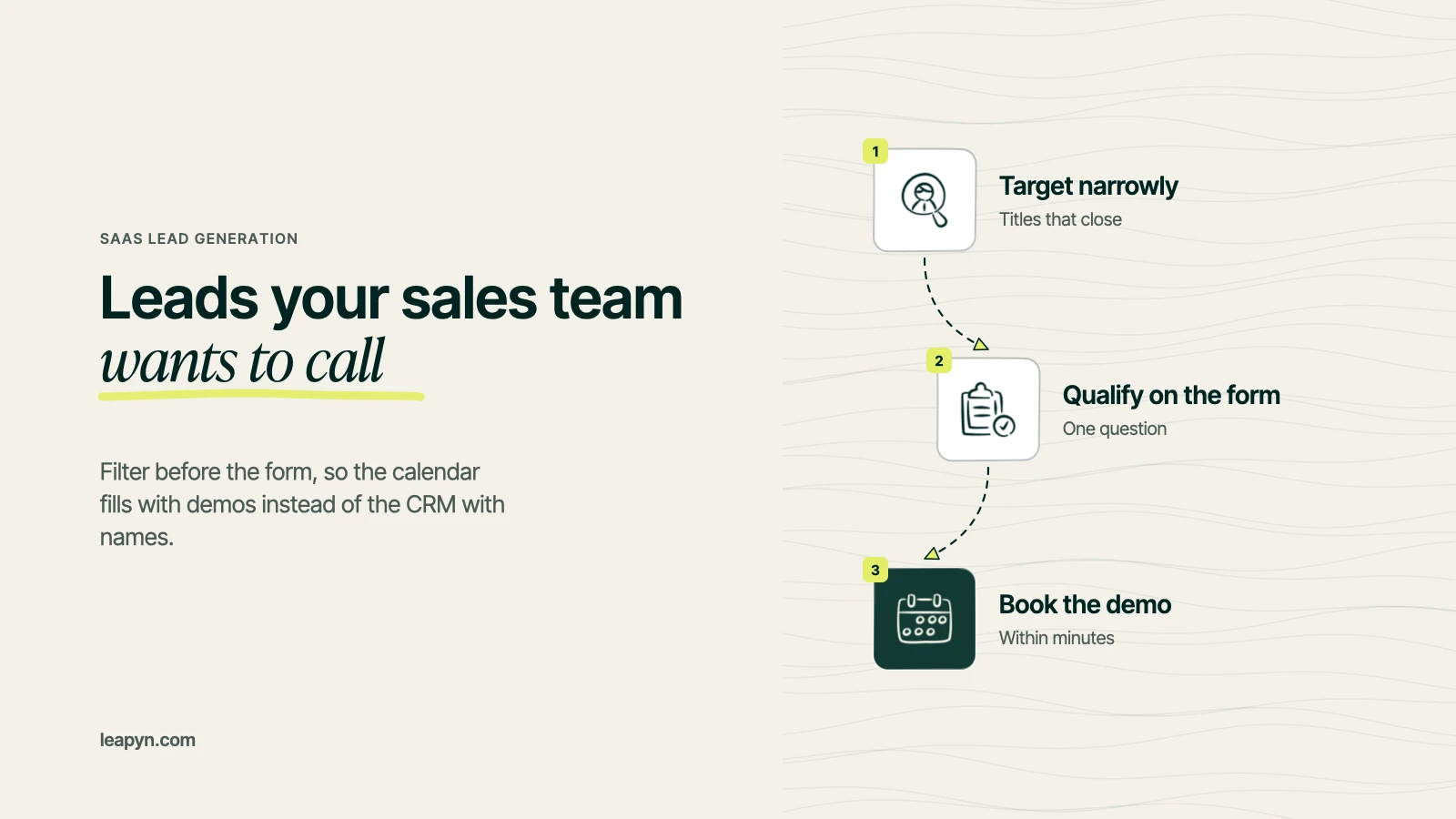
Follow a single good lead to see how SaaS lead generation should work. An asset manager searches for a comparison between two portfolio reporting tools and lands on your honest comparison page. They read it, check your pricing page and leave. A week later a LinkedIn ad shows them a short customer story from a firm their size, and they come back to download a sample report. The form asks for portfolio size, which tells sales this is a fit before anyone picks up the phone.
That lead reaches sales with its history attached. The rep can see the comparison page, the pricing visit and the sample report, so the first call starts with the question the buyer is already asking. Compare that with a lead who downloaded a generic ebook with a personal email address. Both count as one lead in a dashboard, and only one of them is likely to become a demo. Build your channels, offers and forms around producing more of the first kind, and judge the work on demos and pipeline.
Lead scoring that sales trusts
Keep scoring simple enough that a rep can explain it. Fit comes from company size, industry and role. Intent comes from actions like visiting pricing, returning to the site or requesting a demo. Score both, route the leads that score high on both straight to sales, and review rejected leads together every two weeks so the model gets better instead of older.
How we hand leads to sales in HubSpot
Every lead gets a source, a fit score and a next step the moment it arrives. Good-fit leads go straight to a rep or a booking link, the rest go into a short nurture sequence, and sales marks every lead as accepted or rejected with a reason. That loop is what lets marketing fix targeting every week. Our HubSpot CRM and automation work sets it up.
What about growth rules like 3, 3, 2, 2, 2?
The 3, 3, 2, 2, 2 rule, often called T2D3, describes a SaaS company that triples revenue two years in a row and then doubles it three years in a row. It describes an ambition rather than a plan. Lead generation that supports that kind of growth comes from a repeatable channel with a known cost per qualified demo, which is why we obsess over the filter more than the volume.
For more, see our lead generation services, our B2B SaaS marketing strategy guide or, if you sell to real estate teams, how we work as a PropTech marketing agency.