The hybrid motion most PropTech companies need
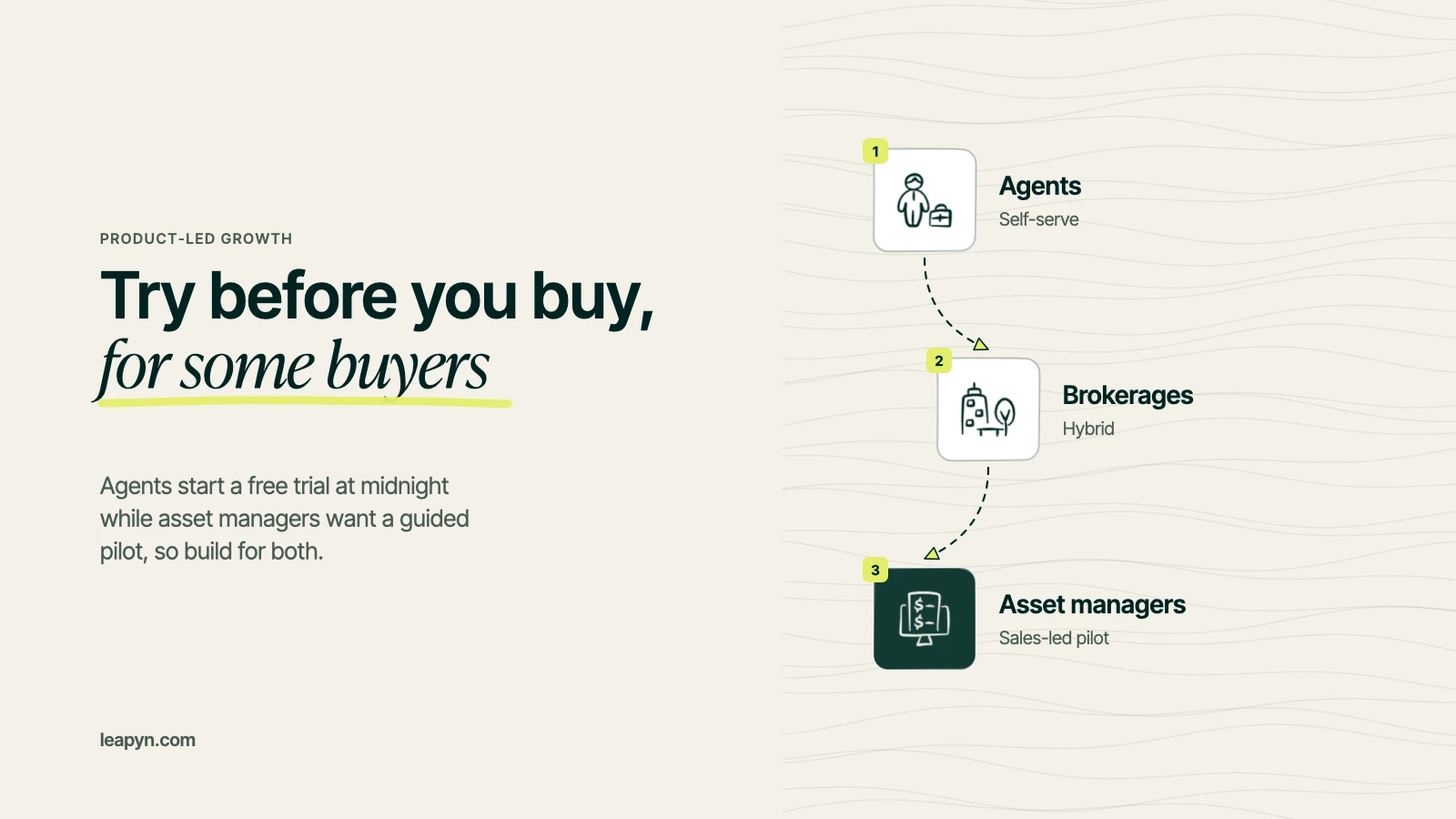
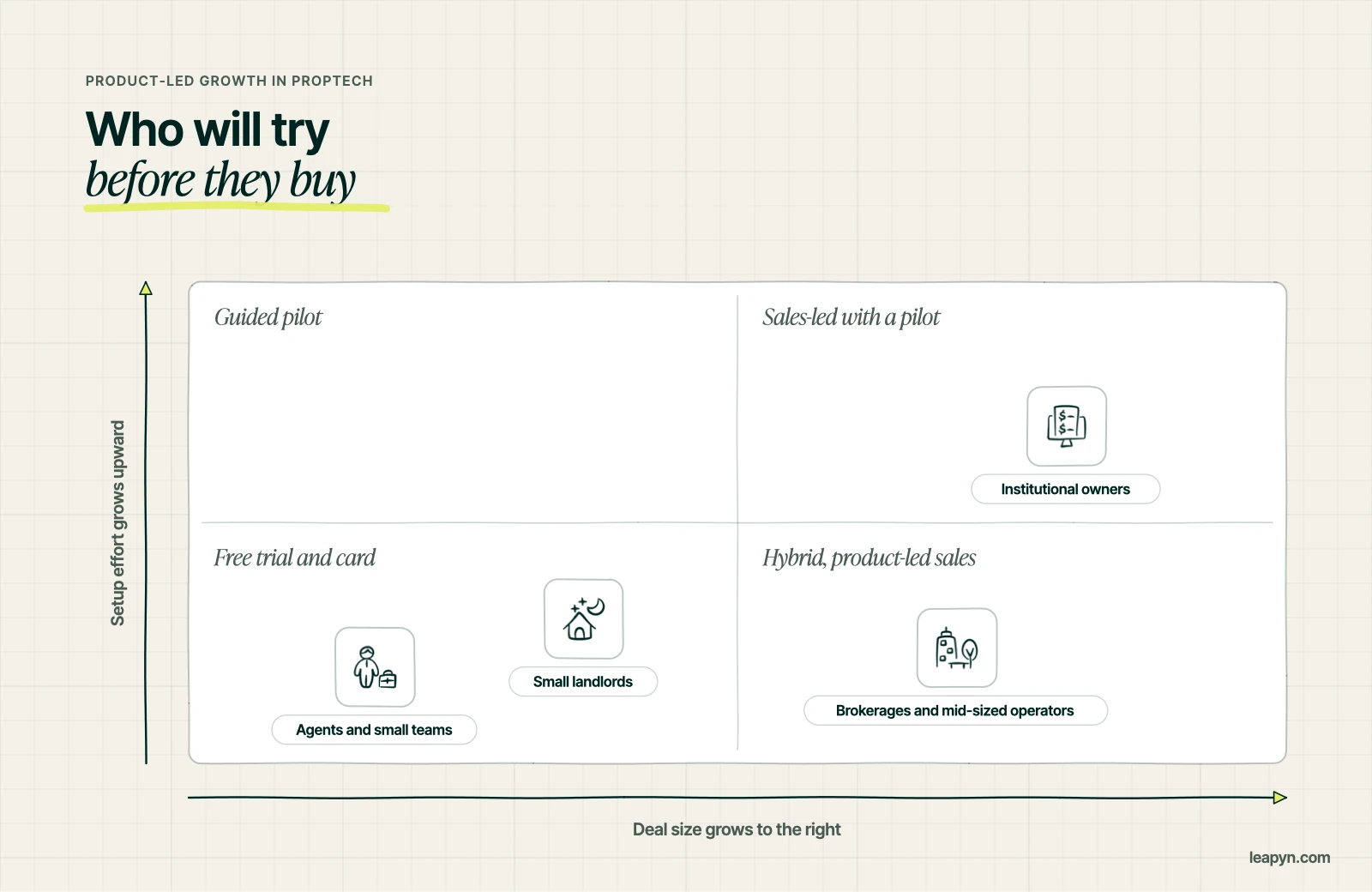
Most real estate software companies end up with a hybrid, often called product-led sales. Individual users can sign up, try the product and get value on their own. When usage shows a team or company is ready for more, a salesperson steps in with context about what that account has already done. The product generates interest, and sales turns it into a larger contract.
The handoff is where most hybrids break. Agree on what a product-qualified lead looks like, such as a certain number of active users at one company, a key feature used several times or a property count above a threshold. Route those accounts to sales automatically, and give sales the usage data so the first conversation starts from what the customer has already tried.
What makes a good PropTech free trial
- Fast time to value. The user should see something useful within minutes, such as a listing published, a payment collected or a report generated. Use sample data if setup would otherwise take days.
- The right integrations first. Real estate users live in a few platforms. If your trial cannot connect to the one they use, it will feel like extra work.
- Onboarding emails tied to behavior. Send help based on what the user has and has not done, not on a fixed schedule.
- A clear path to talk to someone. Some users will want a person before they commit. Make that easy rather than hiding it.
What to measure in product-led growth
Track five numbers.
- Sign-ups by buyer type
- Activation rate
- Time to first value
- Conversion from trial to paid
- Expansion revenue from accounts that started self-serve
Split every number by buyer type, because an average across agents and asset managers hides the story.
Pricing for product-led growth in real estate
Self-serve buyers need to see a price before they will start. Publish a simple monthly plan for individuals and small teams, price by a unit buyers already think in, such as seats, doors or listings, and keep a "talk to us" tier for portfolios. Hiding every price behind a demo form sends self-serve buyers to the competitor whose pricing page answers the question in ten seconds.
Following one account from free user to company contract
Say a leasing agent at a mid-sized operator signs up for a free tour scheduling tool to manage their own showings. Within a month two colleagues join because the shared calendar saves them phone tag. Usage crosses the threshold sales agreed on, and a rep reaches out with a note about how the three agents use the tool and what a company-wide setup would add, instead of a generic demo invite. The regional manager takes the call because the product is already in use and liked. Procurement still happens, with a security questionnaire and a pricing conversation, though the hardest part of the sale was done by the product weeks earlier.
That path is product-led growth in PropTech at its best. The product wins the users, the usage data tells sales when to step in and the contract that follows is larger because the buyer has already seen the value. Building that path takes clear usage thresholds, a CRM that sees product data and a sales team willing to wait for the signal.
When product-led growth is the wrong choice
If your product needs data migration, custom integrations or a security review before anyone can use it, a free trial will frustrate more buyers than it converts. Offer a guided pilot instead, with a clear start date, success measures and a decision at the end. That keeps the spirit of trying before buying without pretending a complex product is self-serve.
Marketing for a product-led PropTech company
Product-led growth still needs marketing. Search and content bring in users with the problem you solve, review sites and communities build trust, and paid campaigns aimed at the right roles fill the top of the funnel. For the lead side, see our guide to SaaS lead generation, and for the overall plan, our PropTech go-to-market strategy. If you want help building the hybrid motion, that is what we do as a PropTech marketing agency.