Virtual staging for spec suites, furnished at the tenant's headcount
A spec suite is already a guess about the tenant. Staging it well means furnishing for the size and type of company most likely to lease it, rather than for a magazine.
A suite sized for twenty people staged with eight desks and a pool table tells a tenant rep the space is too big. The same suite staged with twenty workstations, two meeting rooms and a kitchen tells her it fits.
Stage the same photo twice when the building is chasing two kinds of tenant. An open plan version for a growing tech company and a private office version for a law or accounting firm cost little more than one, and they let each tenant rep send the version that matches her client.
Pair the staged photos with a floor plan that shows the same layout and headcount. A virtually staged suite without a plan looks nice, and with one it looks like a proposal. To see how the suite fits the wider leasing set, read about office building rendering.
Retail virtual staging stops at the grease trap
Retail boxes are harder to stage than offices, because the buyer is a retailer who knows exactly what they need and will spot a fantasy quickly.
- Start at the storefront. Show the glazing, the door and a signage zone with a placeholder brand until a lease is signed.
- Keep the sight lines honest. Shelving, fixtures and a counter should sit where the column grid and the back of house door allow.
- Stage the use the zoning allows. A clothing shop, a clinic and a cafe need different fixtures, and a cafe in a box zoned for retail sales only invites the wrong calls.
- Be careful with restaurants. A hood, a grease trap and a walk in cooler are building systems, so staging a kitchen that isn't plumbed promises a fit out the landlord hasn't paid for.
When the retail space is a dirt floor in a building under construction, there is nothing to photograph and staging can't help. That's the moment for a rendering, which our post on exterior vs interior rendering helps you scope.
Virtual staging vs interior rendering vs physical staging
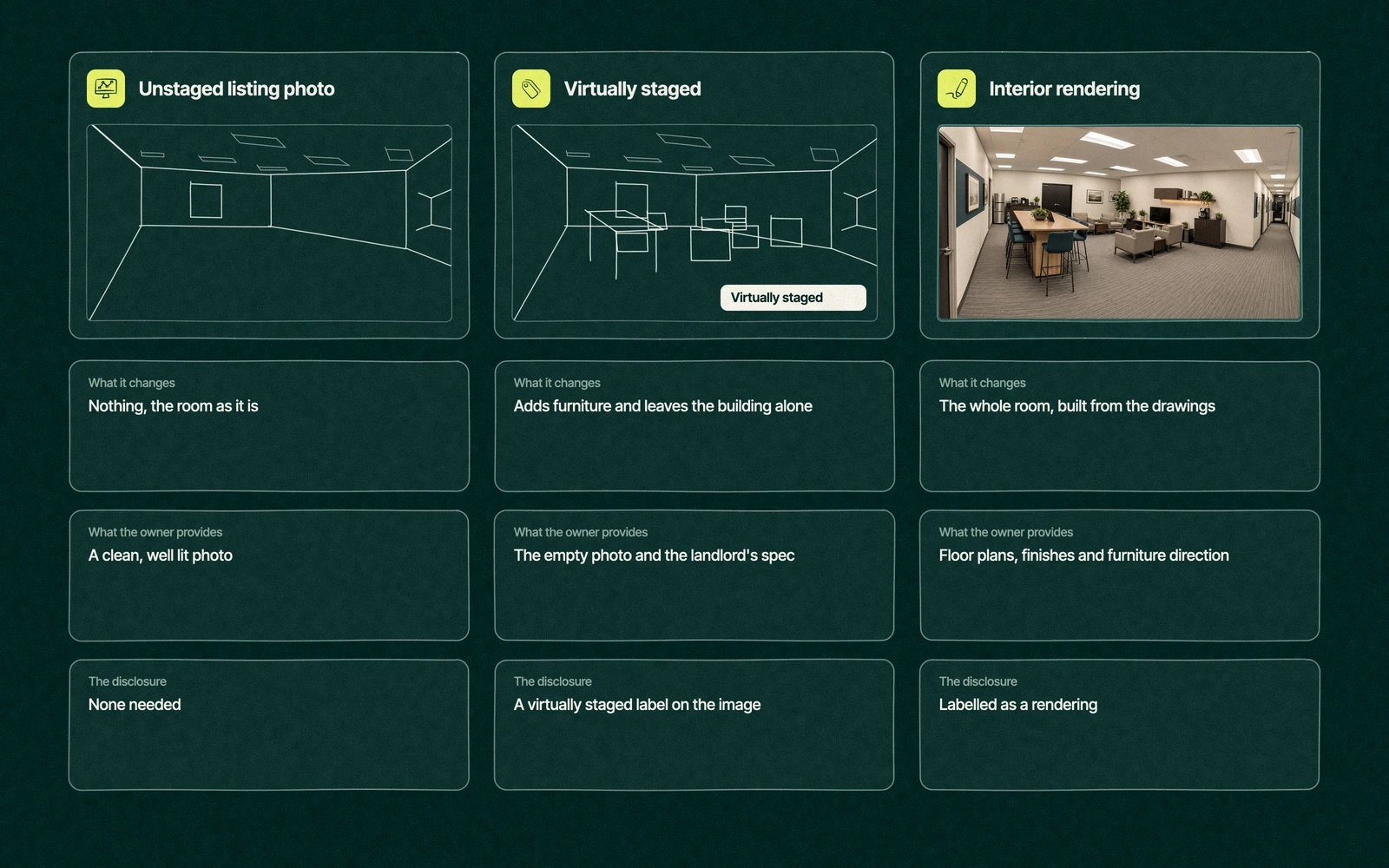
The three get confused because they all end in a furnished picture. They start from different places, and they ask different things of the owner.
| Option | What it starts from | What sets the cost | Speed | Best for |
|---|
| Virtual staging | Photos of the existing space | Number of photos and how much furniture goes in | Fastest | Vacant second generation suites, retail boxes with finished walls |
| Interior rendering | Drawings, a 3D model and site photos | How many rooms are modelled and how detailed | Slower | Shell space, spec suites before build out, renovations |
| Physical staging | Rented furniture in the actual space | Furniture, delivery and monthly rental | Slowest | Model suites that tenants tour in person |
Many buildings use more than one. A rendered spec suite sells the floor before construction, virtual staging keeps the listing alive once it's built, and one furnished model suite gives tours somewhere to end. When a tenant can already walk the space, our post on virtual tours for commercial real estate shows when a scan of the staged suite helps.
Can ChatGPT do virtual staging?
ChatGPT and other image tools can add furniture to a photo in seconds, and for a quick test of an idea they're fine. They also redraw whatever they like, so windows move, ceilings rise and a column can disappear behind a plant that wasn't there.
That's the problem for a listing. An AI edit that changes the architecture fails the disclosure test even with a label on it, because the label says furniture was added and the picture shows a different room.
Use AI for options, then check every staged image against the empty photo before it's published. If the walls, windows, floor and ceiling don't match exactly, it isn't staging anymore.
The suite that sat through three listing cycles, staged twice
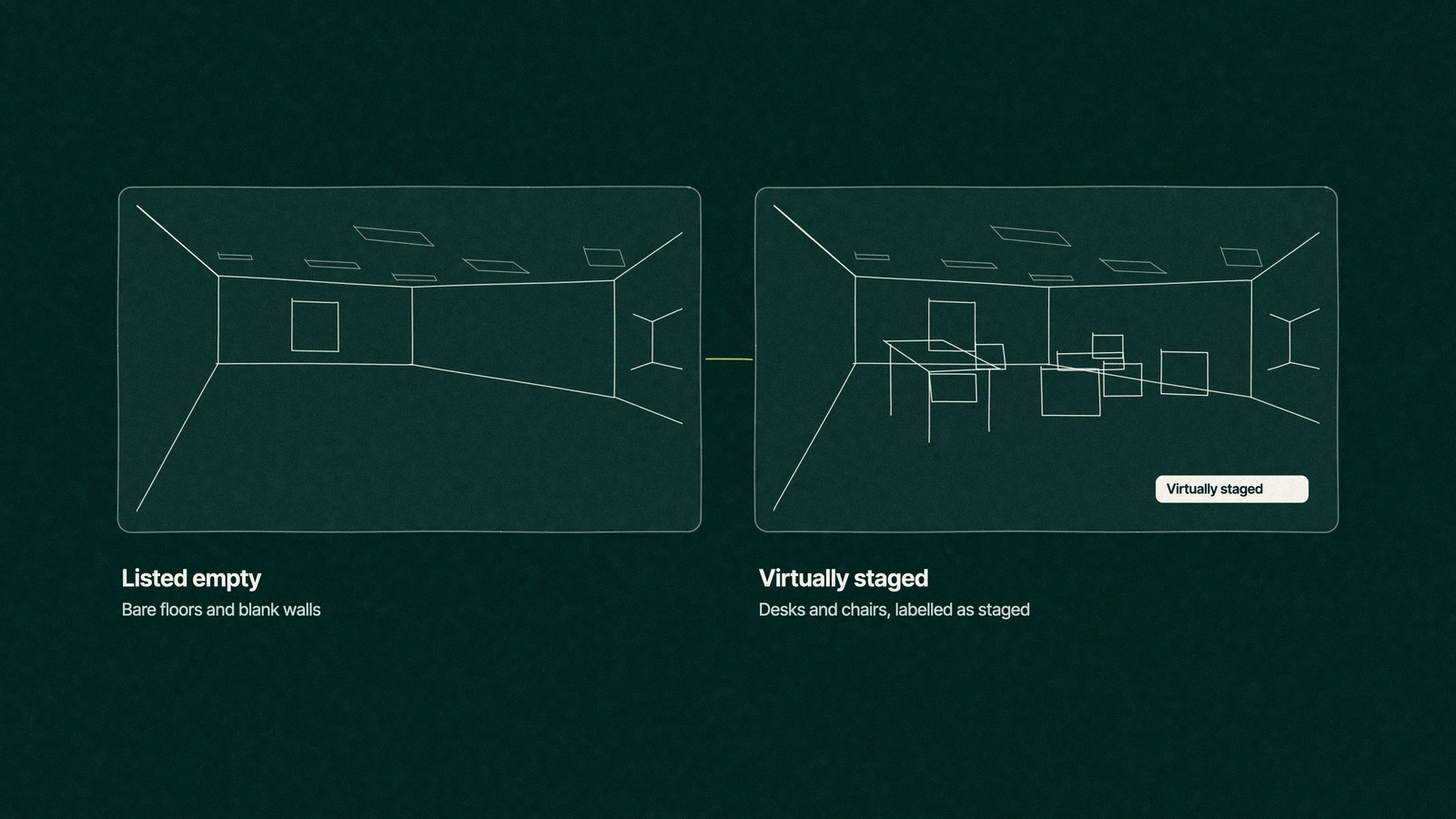
Back on the second floor, picture the property manager trying it properly. She orders two staged versions of the same three photos, one open plan and one with private offices on the window line, each labelled in the corner.
The listing now leads with the open plan view, keeps the empty photo in the gallery and links a floor plan with the headcount. The brochure gets the private office version, because the broker working the building has two law firms looking.
On the first tour, the tenant rep holds her phone up beside the window and compares the staged photo with the room. The columns are where the photo said, the carpet is the carpet, and the desks are the only thing that isn't there yet. That match is what gets the suite onto the second visit.
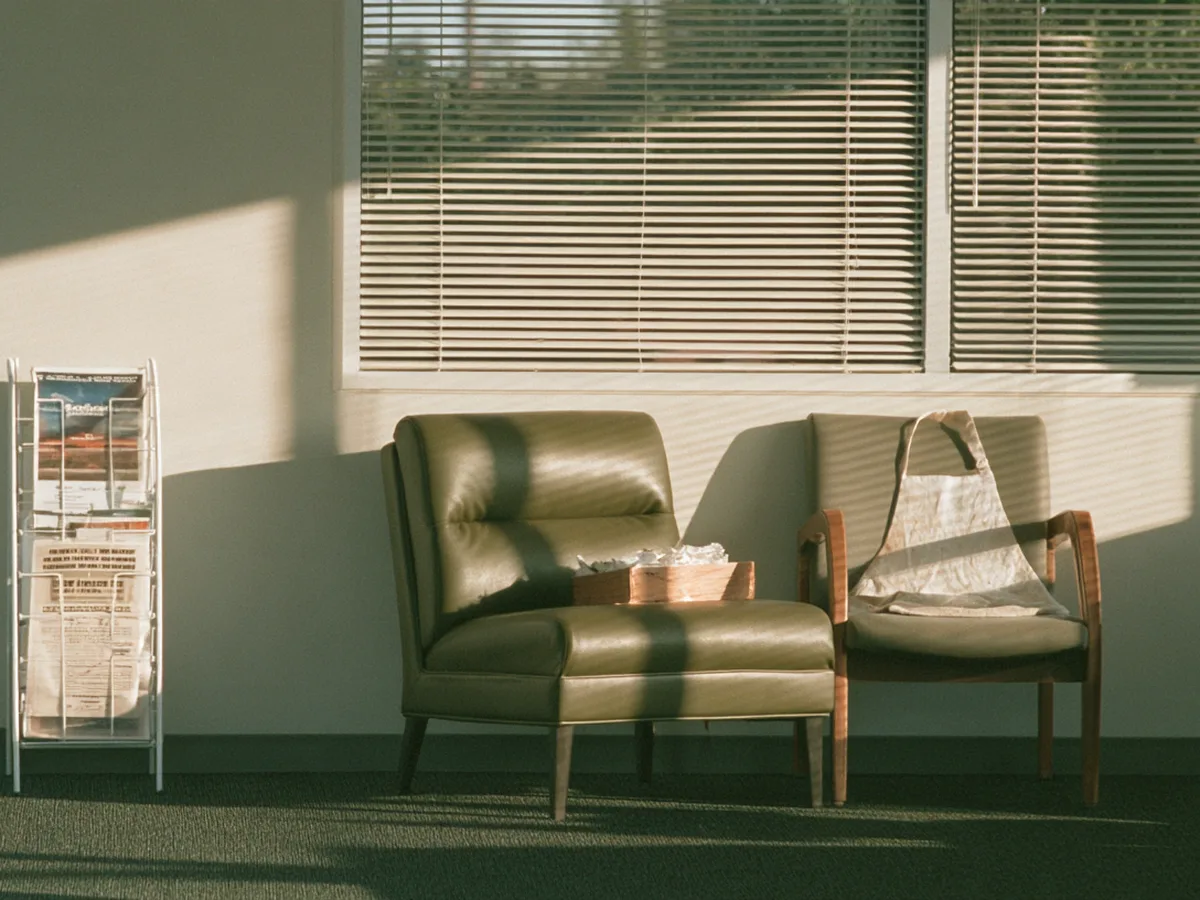
The carpet sample finally leaves the corner, which the property manager counts as the first sign of progress.
Virtual staging costs for commercial space, and where we fit
Virtual staging is usually priced per photo, with more for heavy furniture, virtual renovation of finishes or staging inside a 360 tour. Interior renderings cost more per image because the room gets built from drawings, and they're the right buy when there's no finished room to photograph.
We make real estate renderings for empty suites from your drawings and site photos, furnished for the tenant the building is chasing. Each furnished spec suite view costs $1,250, and a set of floor plate graphics with the layout and headcount costs $1,000. Our 3D rendering cost guide explains what pushes a quote up.
Every image we deliver for a listing carries the label it needs, and our commercial real estate marketing team builds the brochure, the listing page and the email around the same set. How a rendering gets made from drawings is covered in our pillar on architectural rendering.
Drop us the photos of the empty suite. We'll furnish it for the tenant you want and label every image. Stage your suite before the carpet sample becomes permanent.