AI architectural rendering, and when it's good enough to put in front of a tenant
Where AI images help a real estate project and where they put a lease, a loan or a hearing at risk, with a straight answer on ChatGPT, copyright and the hybrid brief that works.
Renderings
Real estate
The Leapyn team
November 14, 2026
10 min read
In this post
toc
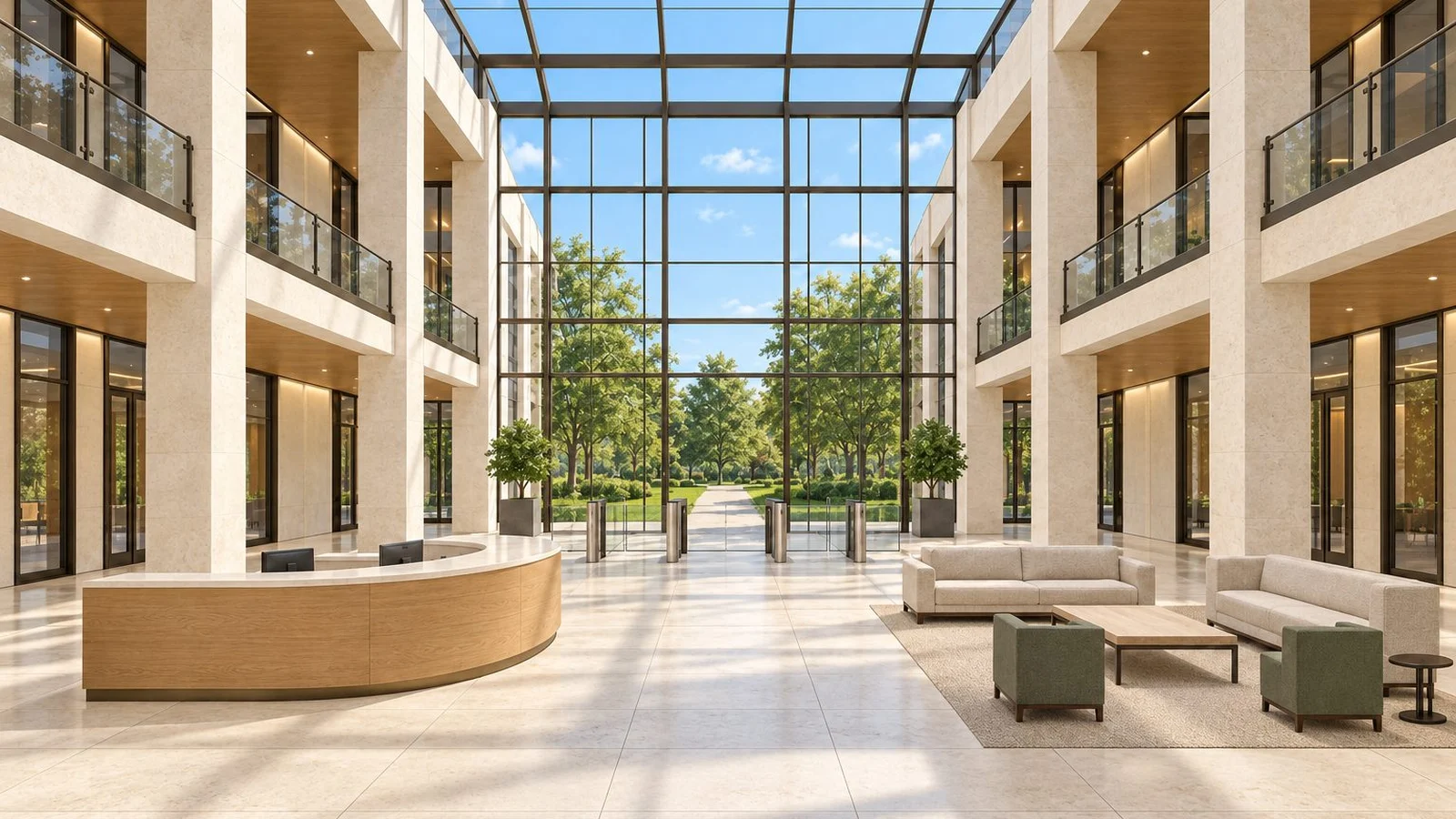
It's Sunday evening, and an asset manager is at her kitchen table with an aging suburban office building and a repositioning pitch due to the investment committee. She uploads a photo of the dated lobby to an AI image tool, types a few lines, and gets back a bright double height entrance with timber slats and a coffee bar.
It looks wonderful. On Monday morning the leasing broker sees it and asks the obvious question, which is whether it can go on the flyer.
That's the question AI architectural rendering keeps raising for owners and brokers. The image arrived in a minute, and her team hasn't checked yet whether the building it shows could be built inside the walls she owns.
What is AI architectural rendering?
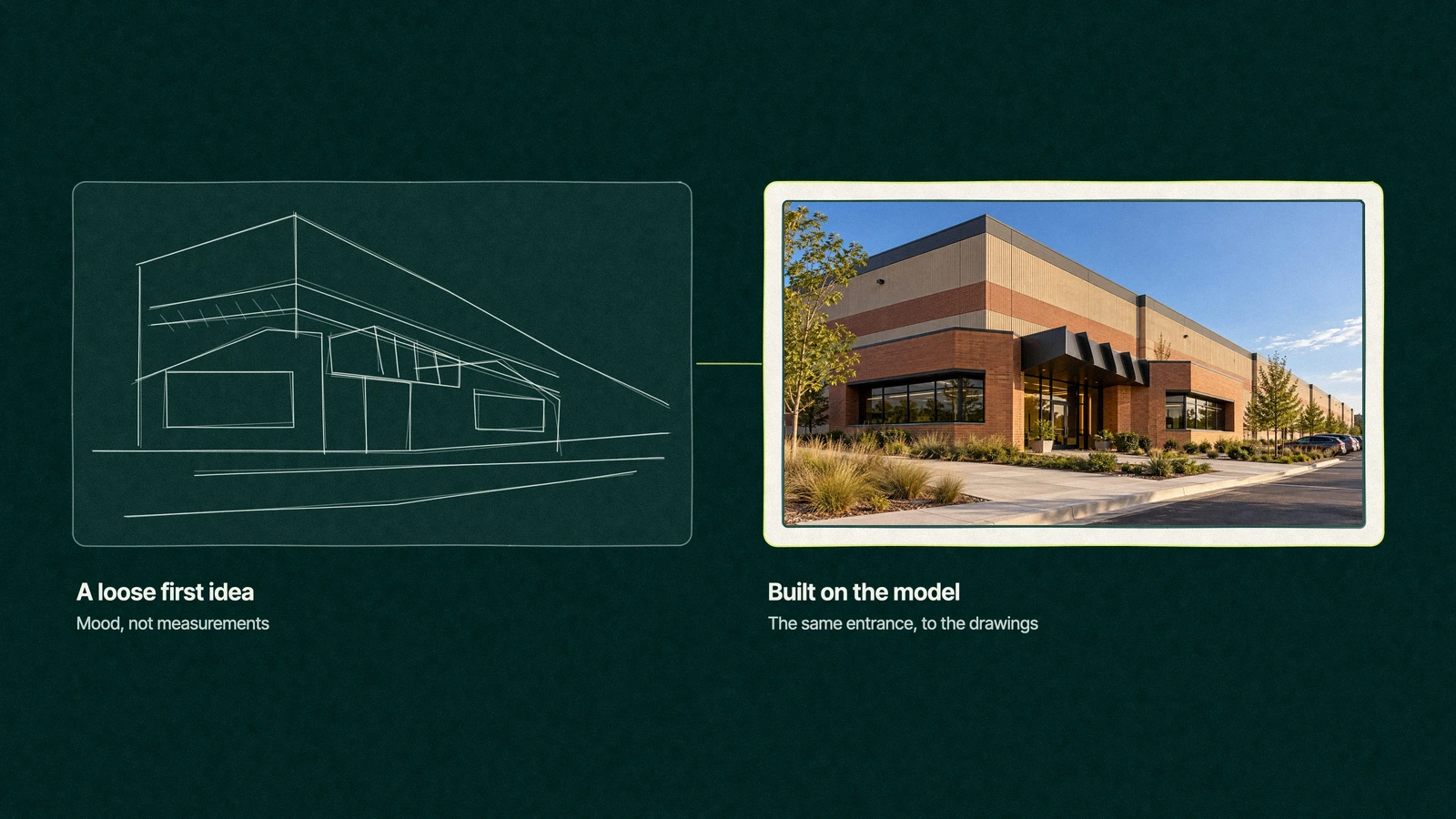
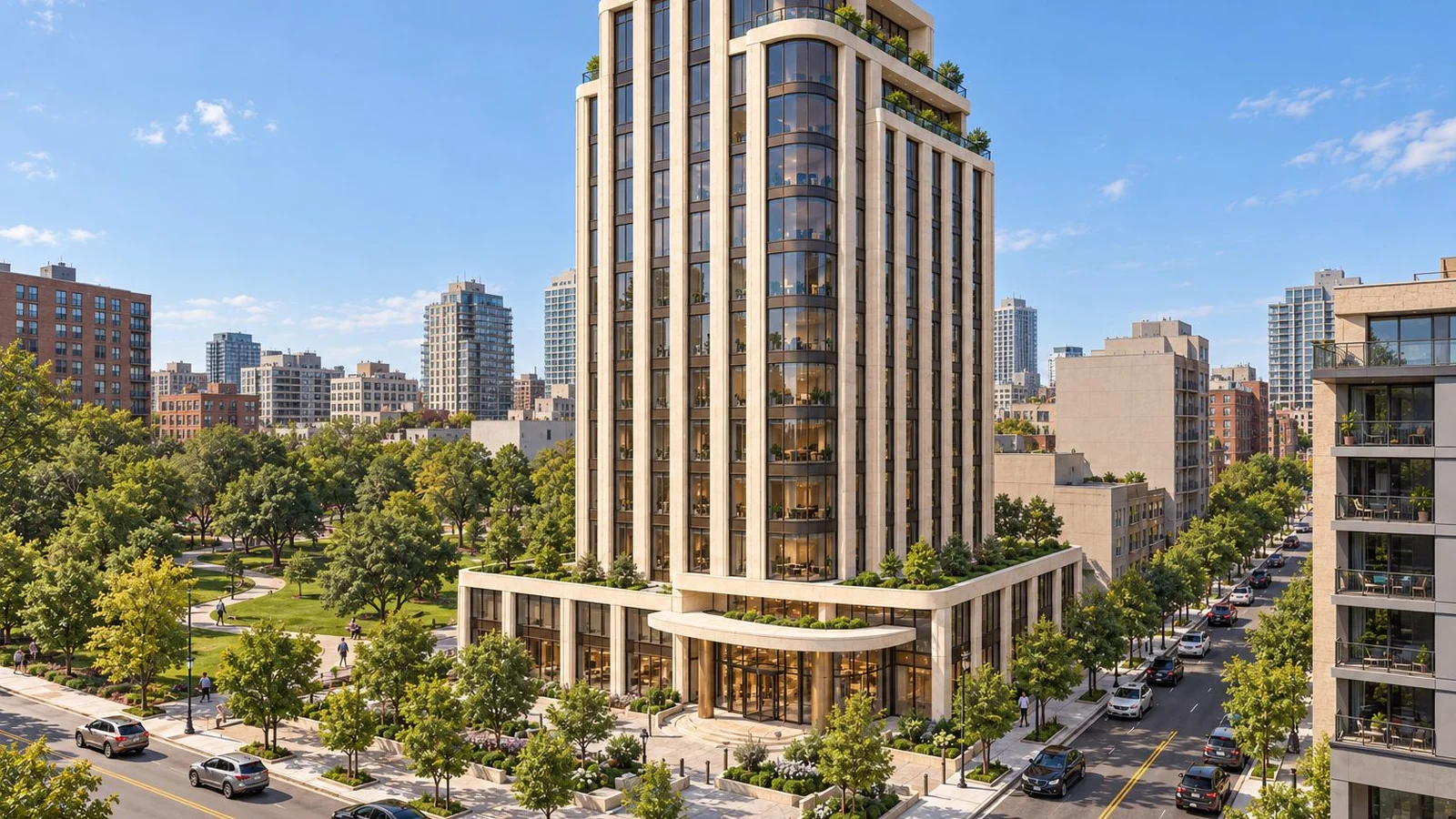
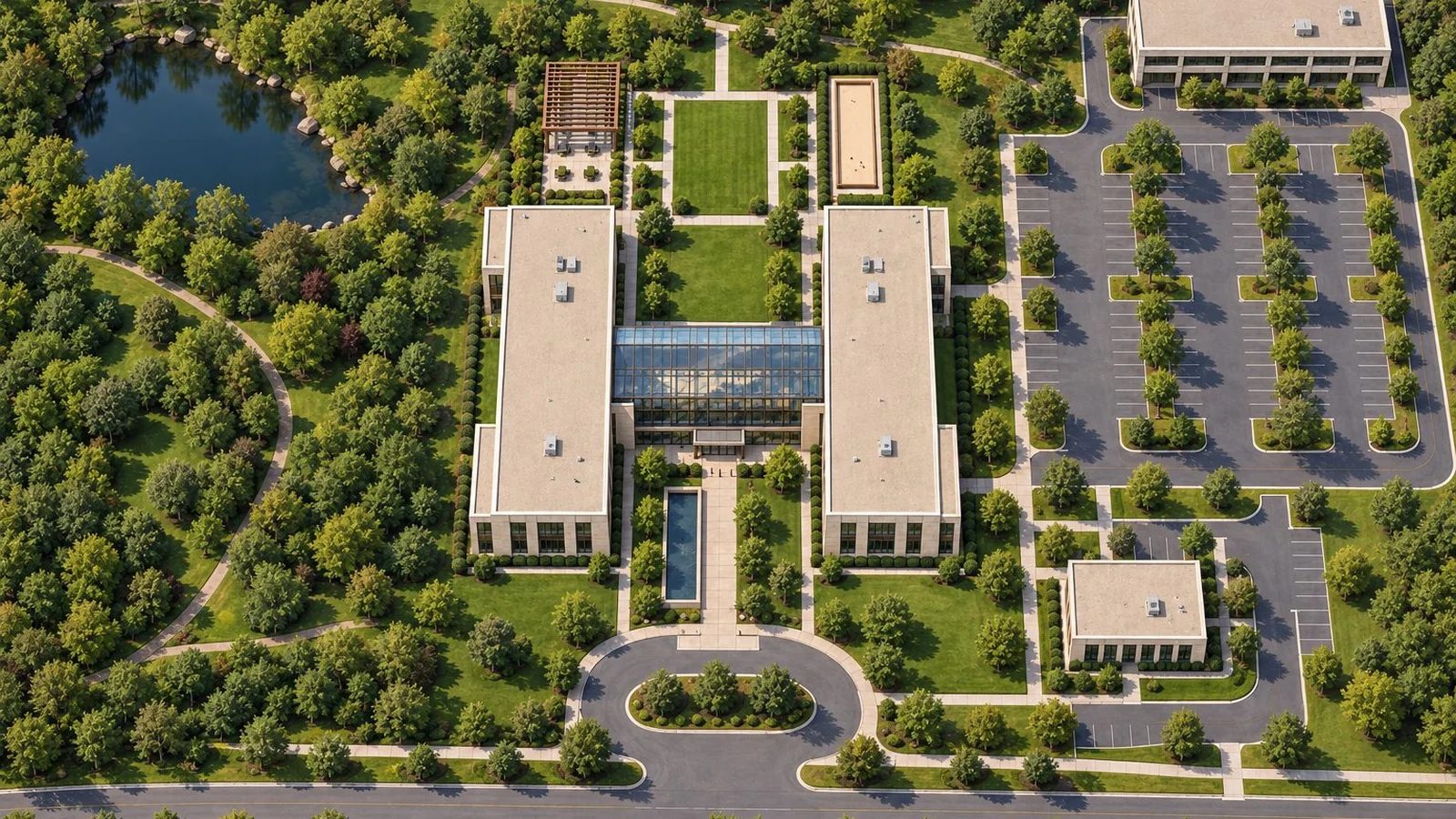
AI architectural rendering means using a generative image tool to make pictures of buildings from text prompts, sketches, photos or a simple 3D model. It's fast and cheap per image, and it's good for ideas. Unless the tool works from dimensioned geometry, the building in the picture can drift from the building in the drawings.
The tools come in three broad kinds. Prompt tools work from words alone, image tools restyle a sketch or a photo, and plugins sit inside design software and render from the 3D model the architect already built.
That third kind matters most to a buyer, because the geometry comes from the model and the AI mostly handles light, materials and planting. Searches for AI render architecture tools return all three mixed together, which is how a lot of owners end up comparing a mood board generator with a production renderer.
Can ChatGPT do architectural renderings?
ChatGPT can generate images of buildings, edit a photo of an existing one and restyle a sketch. For a concept, a mood board or a first conversation with an architect, that's useful and fast.
What it can't do reliably is hold a building to a set of drawings. Ask for the same building from a second angle and the window count, the floor count or the entrance often changes, because the tool is producing a plausible picture rather than measuring anything.
So the answer to whether you can use ChatGPT for architectural renderings depends on who will rely on the image. For your own thinking, go ahead. For a tenant, a lender or a planning board, the image needs to come from a model built to the dimensions.
A prompt is a wish, and a drawing is a promise. Marketing images are read as promises, whatever the footnote says.
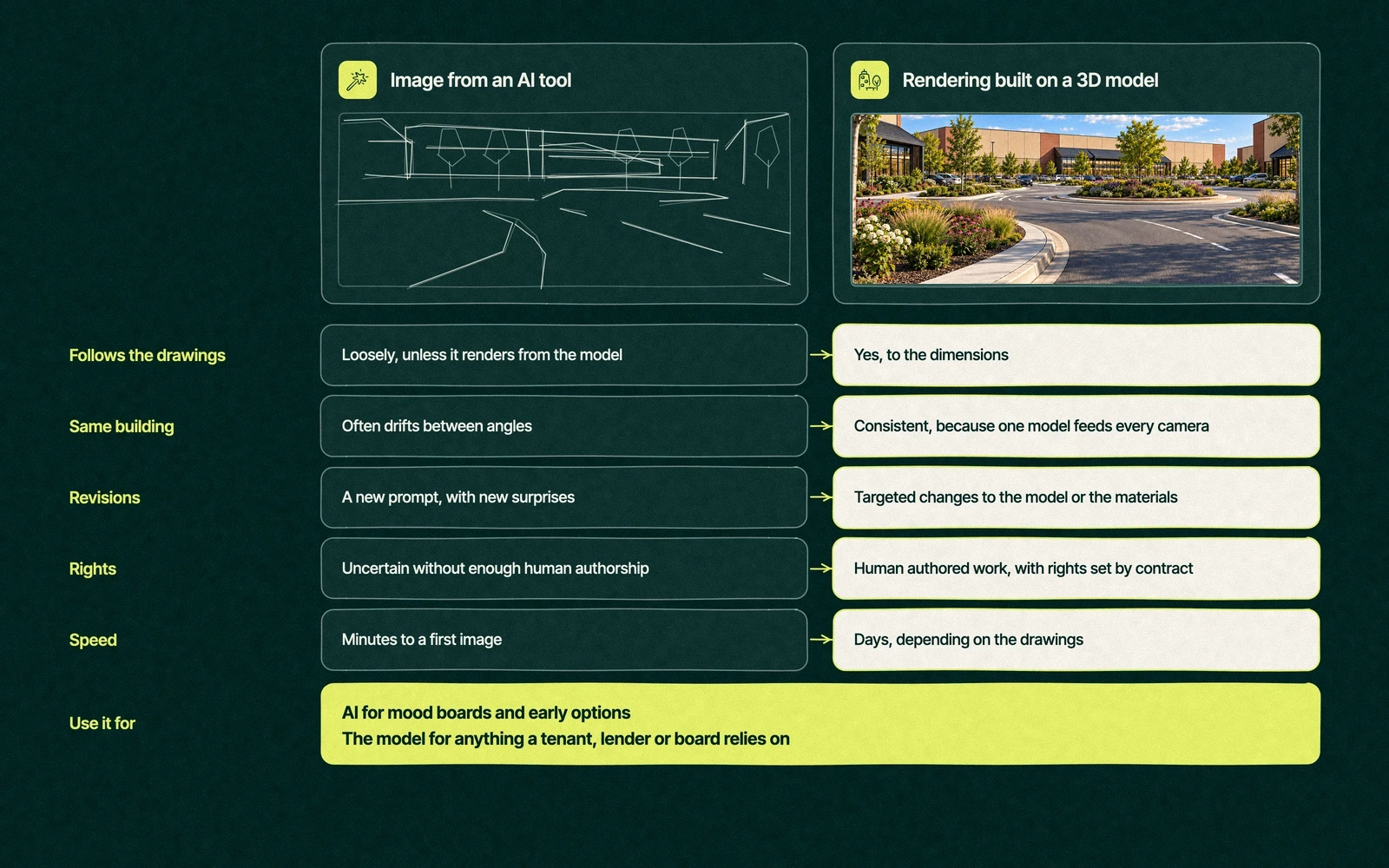
AI rendering vs 3D rendering, compared by what a broker can sign off
For an owner weighing AI architectural rendering against a model, the comparison doesn't hinge on image quality. It comes down to whether the picture will still be true when the tenant walks in.
Image from an AI tool
Rendering built on a 3D model
Starts from
A prompt, a sketch or a photo
CAD, Revit or PDF drawings
Follows the drawings
Loosely, unless it renders from the model
Yes, to the dimensions
Same building across views
Often drifts between angles
Consistent, because one model feeds every camera
Revisions
A new prompt, with new surprises
Targeted changes to the model or the materials
Speed to a first image
Minutes
Days, depending on the drawings
Copyright position
Uncertain without enough human authorship
Human authored work, with rights set by contract
Best use
Mood boards, early options, internal pitches
Leasing, financing, approvals and signage
Read the table as a split of jobs rather than a contest, because the strongest AI architectural rendering workflows feed a model instead of replacing it. Most good projects use both, at different moments, for different readers.
When is an AI render good enough for real estate marketing?
Judge AI architectural renderings one use at a time, by the cost of being wrong. A mood board that misses a floor costs nothing, while a leasing flyer that adds one can cost a deal and a reputation in the same week.
Use
Image from an AI tool alone
What it needs
Mood board for the design team
Good enough
Nothing more
Internal investment committee pitch
Often good enough
A clear concept label
Social post teasing a project
Risky without a label
A concept label, or a model view
Leasing flyer or offering memorandum
Not reliable
A model built from the drawings
Zoning or design review hearing
Not reliable
Documented camera positions and true heights
Fence wrap and site signs
Not reliable
A model view rendered at print resolution
Site plan with counts
Not reliable
The site plan drawings
The hearing row deserves its own warning. A view a board relies on has to match the plans, and our post on renderings for zoning approval covers why accuracy beats polish in that room.
Can AI make architectural renderings that pass every row? It can when it renders from the architect's model, because then the geometry is fixed and the AI is only dressing it.
Trade You.
Your email for great content delivered to your inbox. Regularly. Unless we forget. Or get busy. But we'll try.
Thank you! Your submission has been received!
Oops! Something went wrong while submitting the form.
The AI render with a fourth floor the architect hadn't drawn
A developer is planning a medical office building of three stories on a corner lot near a neighbourhood. Before the drawings are finished, a marketing coordinator makes an AI render from the massing sketch to announce the project on LinkedIn, and it looks great.
It also has four floors. The tool added one, as image tools sometimes do, and the team didn't count the windows before posting.
At the community meeting a neighbour holds up a screenshot. The architect spends the first twenty minutes explaining which floor doesn't exist, and the room spends the rest of the evening wondering what else isn't true.
The AI added a fourth floor, which was generous, though the lender had only financed three. The image that could have saved the evening was a plain massing view from the sidewalk, built from the true heights.
The fix was cheap. The team took the post down, built a gray model from the drawings, and labelled every later concept image as a concept, which is a habit worth keeping long after the meeting is forgotten.
Who owns an AI rendering, and can you put it in a brochure?
Ownership is less settled than most buyers assume. The US Copyright Office's report on copyrightability, published in January 2025, concluded that outputs can be protected only where a human author has determined enough of the expressive elements, and that prompts alone don't qualify.
The Office's announcement of that report also said protection can apply where human authored work is perceptible in the output, or where a person makes creative arrangements or modifications of it. In practice, an image made from a short prompt may be hard to protect, so a rival could reuse your hero image and you'd have little to stop them. Ask your counsel before you build a brand around one.
Accuracy is the second issue. Brokers who are members of the National Association of REALTORS work under the 2026 Code of Ethics, whose Article 12 asks them to present a true picture in their advertising and marketing. Its Standard of Practice 12-10 extends that duty to images and bars misleading ones.
A concept label goes a long way. These habits keep an AI image on the right side of both issues.
Label concepts as concepts, on the image itself rather than in a footnote that rarely gets printed.
Count what can be counted, including floors, windows, doors and parking, before anything leaves the building.
Keep the prompt and the edits, so you can show the human work if the image's ownership is questioned.
Swap in a model view before the image appears on a flyer, an offering memorandum or a site sign.
Architectural visualization AI in a hybrid brief that holds up
Most teams don't need to choose a side. The workable approach uses architectural visualization AI where speed helps and a model where accuracy pays, and the brief says which is which.
Explore with AI. Use image tools for materials, moods and options while the design is still loose, and keep the results inside the team.
Pick a direction. Choose two or three AI images as references for the look you want, and say what you like about each.
Build the model. Hand the drawings and the references to the rendering team, so the geometry comes from the plans and the mood comes from the references.
Check the counts. Review the gray model for floors, doors, parking and signage before any light or materials go on.
Render the finals. Produce the marketing set from the model at the size the fence wrap needs, then cut down for web and social.
Keep AI for variations. Seasonal versions, sky changes and social crops built from an approved final are lower risk, because the building underneath stays put.
Where AI renderings stop and our model work starts
Bring your AI concepts to the first call, whatever tool made them. They make a better brief than a paragraph of adjectives, and they show us the mood you want faster than any reference board.
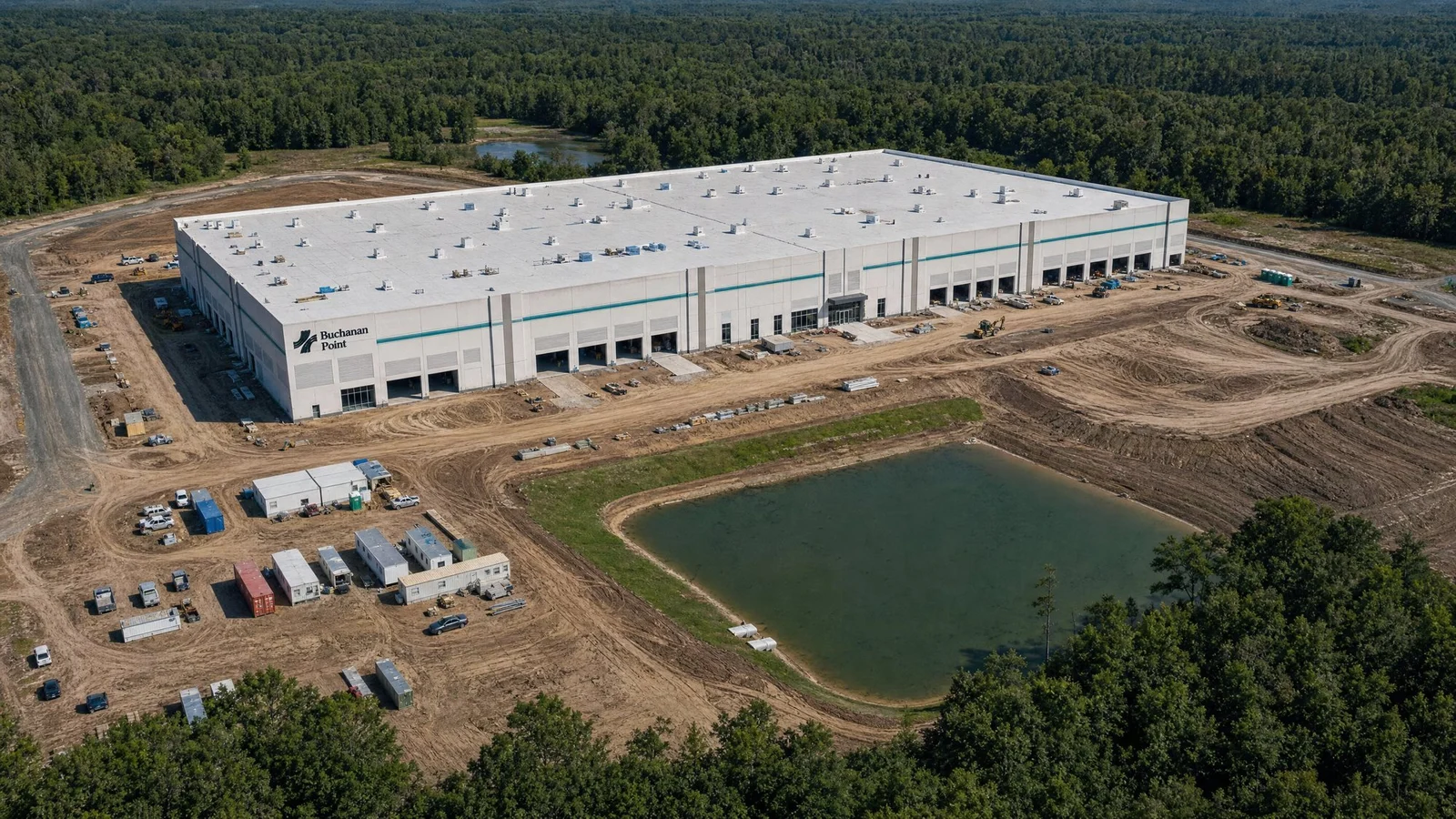
Finals get built on a model from your drawings, so the building in the brochure is the building the tenant tours. An added view costs $1,000 once the model exists, and a three view concept set is $3,000. Our guide to 3D rendering costs explains what moves a quote.
Bring us the AI concept you like. We'll build the version a tenant can hold you to.Start from your concept and your latest drawings.
“
The first call felt like talking to someone who already understood our business. We didn’t have to explain the basics. They showed up with questions that mattered.
James L.
Director of Growth, HR tech
Client
FAQ
Frequently asked questions
What is the best AI rendering for architecture?
+
Tools that render from the architect's 3D model are the safest choice for real estate, because the geometry comes from the drawings and the AI handles light and materials. Prompt tools and photo restyling tools are better for mood boards and first design options. For leasing, financing or approvals, judge any tool by whether the building stays identical across every view.
Are AI renderings accurate enough for leasing?
+
For a flyer, offering memorandum or property website, images made by AI tools alone are rarely accurate enough, since floors, windows, doors and parking can drift from the plans. A tenant who tours the finished space will compare it with the picture. Use AI for early concepts, then switch to a model built from the drawings before marketing starts.
Who owns the copyright on an AI rendering?
+
Under the US Copyright Office's January 2025 report, AI outputs are protected only where a human author has determined enough of the expressive elements, and prompts alone don't count. Human work visible in the image, or creative arrangement and editing of it, can be protected. A rendering built by a person on a 3D model sits on firmer ground, with rights set by contract.
Is AI architectural rendering cheaper than 3D rendering?
+
Per image, AI is usually far cheaper and faster, which makes it a sensible way to explore options. The saving shrinks once the image has to match the drawings, because someone still has to check and correct every view. For marketing and approvals, a model based set often costs less overall than repeated AI images that keep changing the building.
Which agencies combine AI and 3D rendering for real estate?
+
Plenty of firms now mix the two, including rendering studios, architects with visualization teams and real estate marketing agencies. At Leapyn, a real estate marketing team in Nashville, we take AI concepts as a brief and build the finals on a 3D model from your drawings, then use those images in the brochure, website and signage. Ask any firm where AI ends and the model begins.
Written by
The Leapyn team
Senior marketers who run strategy, creative and demand gen for B2B companies. We write about what’s working for our clients right now.