Identify website visitors by company, a step by step guide for sales teams
How company-level and person-level visitor identification work, why Google Analytics can't name the companies on your site, what Leadfeeder and RB2B cost and a six step setup with an outreach rule for reps.
Lead generation
The Leapyn team
November 28, 2026
10 min read
In this post
toc
When a fleet trade magazine ran a short piece on Carlos Mendes's company in September, pricing page visits doubled inside a week and nobody could say whose they were. Carlos is VP of sales at a telematics software company that puts trackers and fault code alerts on delivery and service fleets, and he had no way to identify website visitors beyond a city name in Google Analytics.
His CEO, Owen, asked the same question in the sales channel most mornings, which was who these people were. Carlos had three reps with quiet calendars and a quarter that still needed four new fleets, and every answer he could give was a guess.
One rep guessed anyway. She emailed every fleet manager she could find in Memphis, because Memphis had the most sessions, and the only reply came from a man asking to be taken off the list.
A month later the visit that answered Owen's question came from a company Carlos had written off a year earlier.
One link in this post is a partner link, so Leadfeeder may pay us if you sign up through it. We only list tools we've tested, and the commission never buys a better spot.
What is website visitor identification?
Website visitor identification is software that tells you which companies, and sometimes which people, are on your website before they fill in a form. Most tools match each visit's IP address to a company, while person-level tools match visits to individual profiles, mostly for US traffic.
It answers a narrower question than most sales leaders hope. You'll learn that a dairy distributor read your pricing page three times this week, and you won't learn whether its fleet manager is ready to buy, so the gap between those two facts is where reps either earn a meeting or burn an account.
For an account-based team it's one of the few signals that comes from the buyer's own behavior. If the list side is new to you, our guide on what account-based marketing is covers how to pick the accounts worth watching.
Website visitor identification at company level and person level
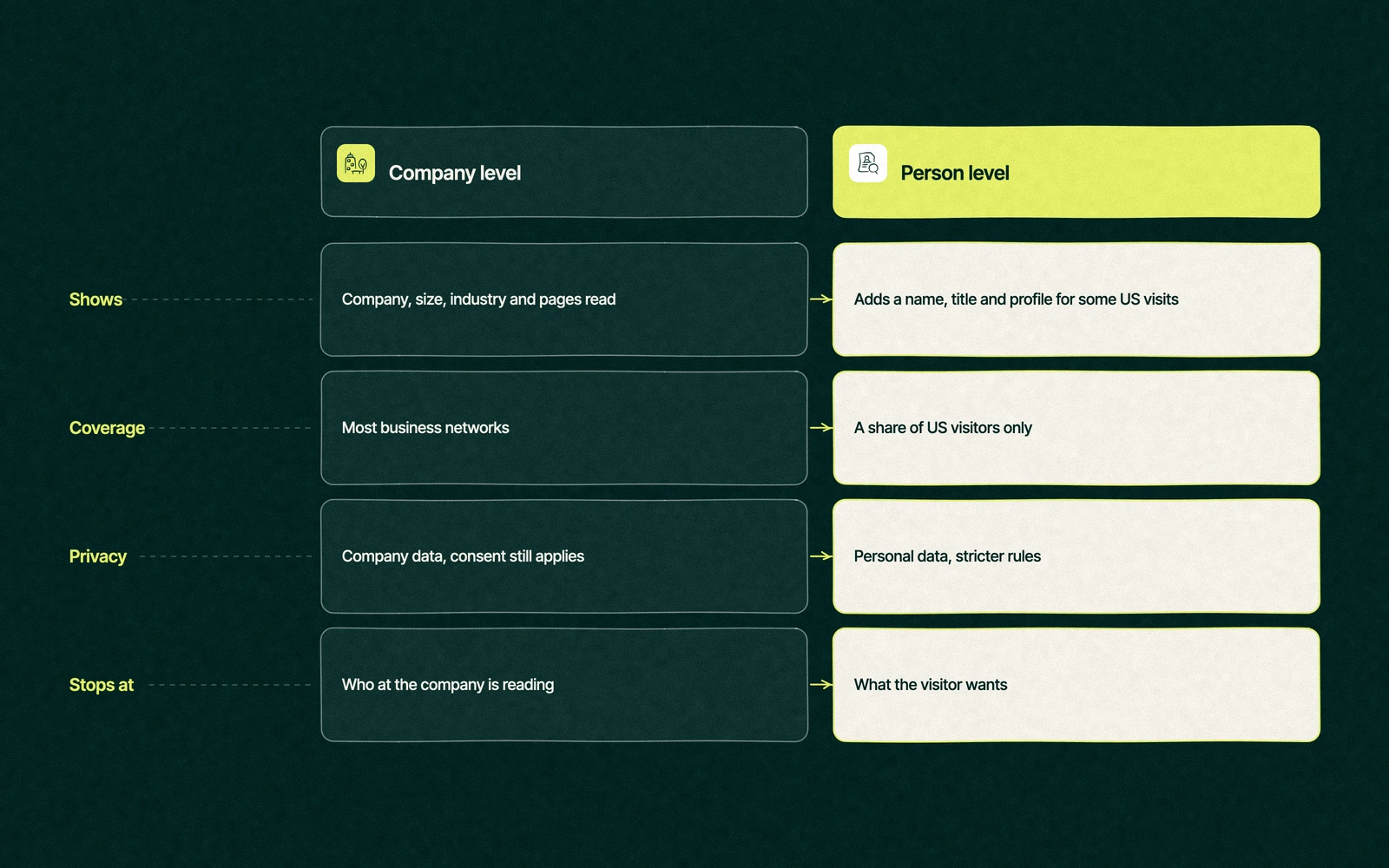
Company-level tools look up the IP address behind a visit and match it to a business. Leadfeeder (partner link) works this way, and its help center says the tracker matches each visit's IP address against company databases and, by default, shows companies rather than named individuals.
Person-level tools try to name the visitor. RB2B says it matches visitors against a permissioned publisher network using cookies, device IDs and IP addresses, and its FAQ states that person-level ID is US-only technology with a US-only database.
An honest RB2B review starts there. For US buyers and reps who act within a day, a LinkedIn profile dropped into Slack is a strong prompt, and for the European half of your traffic the person-level feature does nothing.
Company level shows the company, its size and industry, the pages it read and how often it came back, which is enough to pick an account and call the right role.
Person level adds a name, title and LinkedIn URL for some US visitors, and a business email on paid plans. RB2B's pricing page put contact-level coverage at 15 to 20% on Starter and Pro and 35 to 45% on Pro+.
Neither shows what the visitor wants, or whether the person reading your pricing is a buyer, a student or a competitor doing homework.
What Google Analytics shows, and why it stops at the city
Carlos started where most teams start, in GA4, and found sessions by city, device and landing page. Google's help page on IP masking says that in GA4 IP addresses are not logged or stored, so your analytics holds nothing for a company lookup to run on.
That's a privacy choice on Google's part, and a sensible one. GA4 can tell you the pricing page traffic doubled and which article sent it, and it can't tell you whose traffic it was.
GA4 alone can't identify website visitors by company, so keep it for the trend and the source and add a visitor identification tool for the names. Leadfeeder's own reports show channels, campaigns and pages by company, so the two sit side by side without arguing.
How to identify website visitors by company, in six steps
To identify website visitors in a way your reps will use, set up the filter and the alerts before you look at a single company. Otherwise the feed becomes one more dashboard nobody opens.
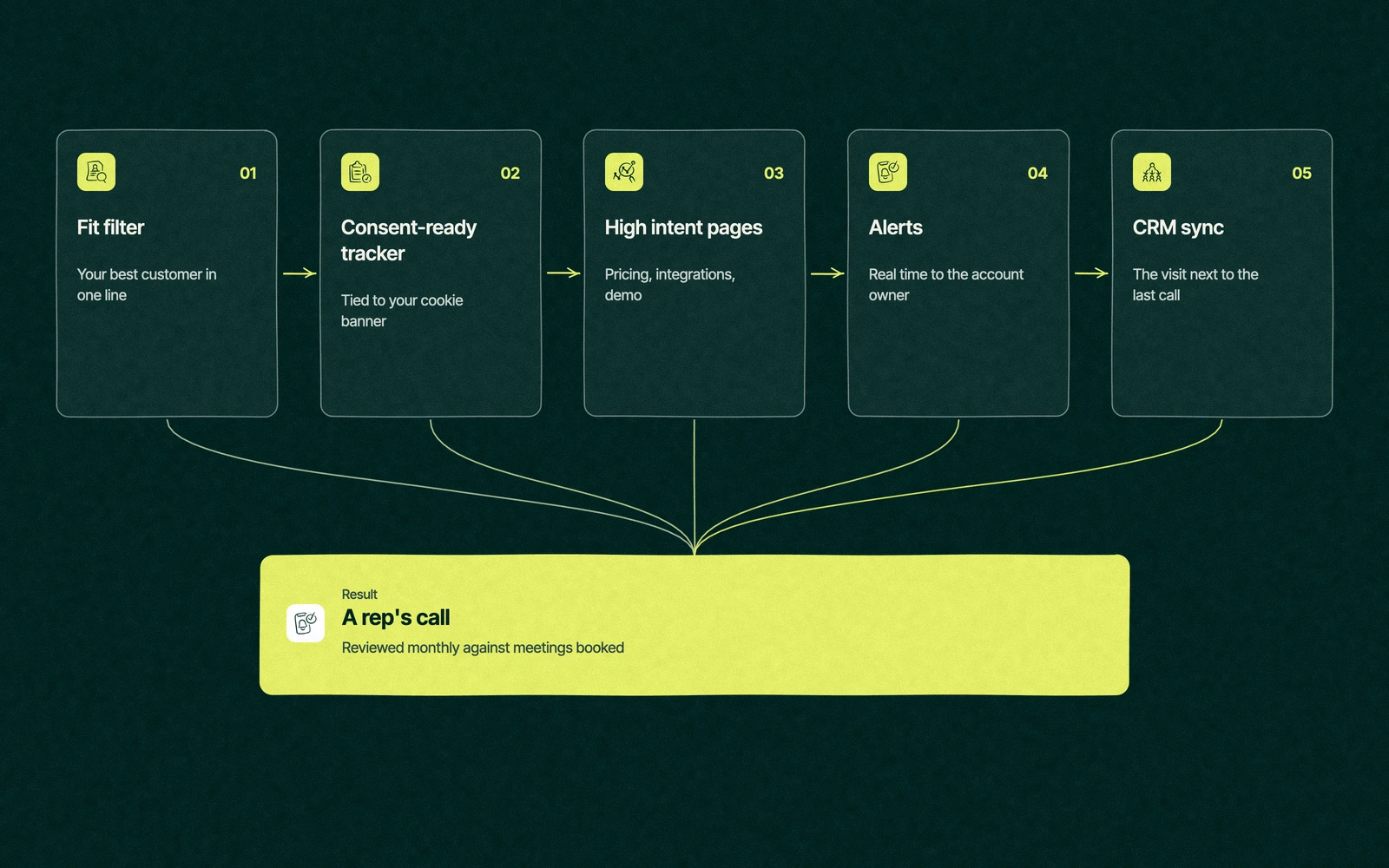
Decide who counts as a fit. Write your best customer in one line, such as fleets of 25 to 200 vehicles in food distribution, field service or utilities, and save it as a filter so the feed hides everyone else.
Install the tracker with consent set up first. Add the script to every page through your tag manager and connect it to your cookie banner before it goes live. Leadfeeder's help center says that when a visitor refuses consent its script sets no cookie and still identifies the company, though it can't recognize returning visitors.
Mark the pages that matter. Treat pricing, integrations, case studies and the demo page as high intent, and treat blog and careers visits as background.
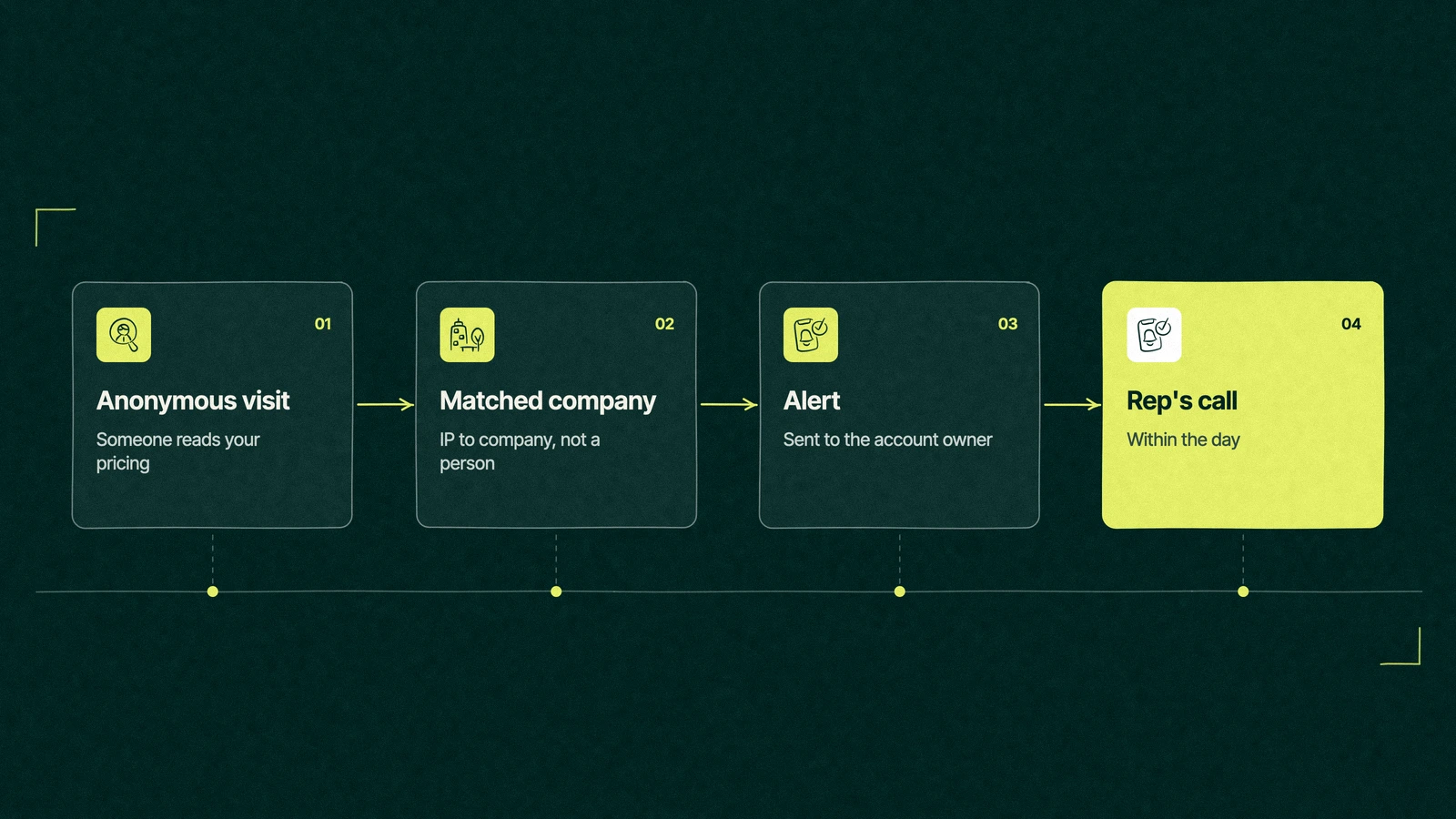
Set alerts instead of dashboards. Send a real-time alert to the account owner when a fit company views a high intent page, and a weekly digest for everything else.
Sync it to the CRM. Push identified companies onto existing records so a rep sees the visit next to the last call, the last email and the open deal. Our guide to HubSpot integrations covers the connection.
Review the rule every month. Check which alerts became meetings, and tighten the filter on the pages and company types that never did.
Carlos had the tracker live two days after Owen's fourth message. The first week's feed held 61 fit companies, nine of them on the pricing page, and for the first time he could answer the morning question with names.
Who gets a call, the rule that keeps website visitor identification useful
A feed of company names is a temptation. The quickest way to waste it is to email every name with a line about their visit, which reads as surveillance and earns the same reply the Memphis campaign got.
Carlos gave his reps four lines and asked them to follow them exactly for a month.
A fit company that views pricing or integrations twice in seven days gets a call or a personal email from the account owner within one working day.
An existing customer on the pricing page goes to its account manager, because that visit can mean an expansion or a cancellation.
A closed-lost account that returns to high intent pages goes to the rep who lost it, along with the old notes.
A single blog visit earns a place on the watch list and nothing more.
At the top of the page he added one more line, which was never to mention the visit. The rep opens with something useful about the account's fleet, and the timing does the rest.
Leadfeeder pricing, and what Dealfront charges for
Leadfeeder's site footer carries the Dealfront Group name, which is why you'll see both brands in reviews. The prices below come from the Leadfeeder and RB2B pricing pages on 27 November 2026.
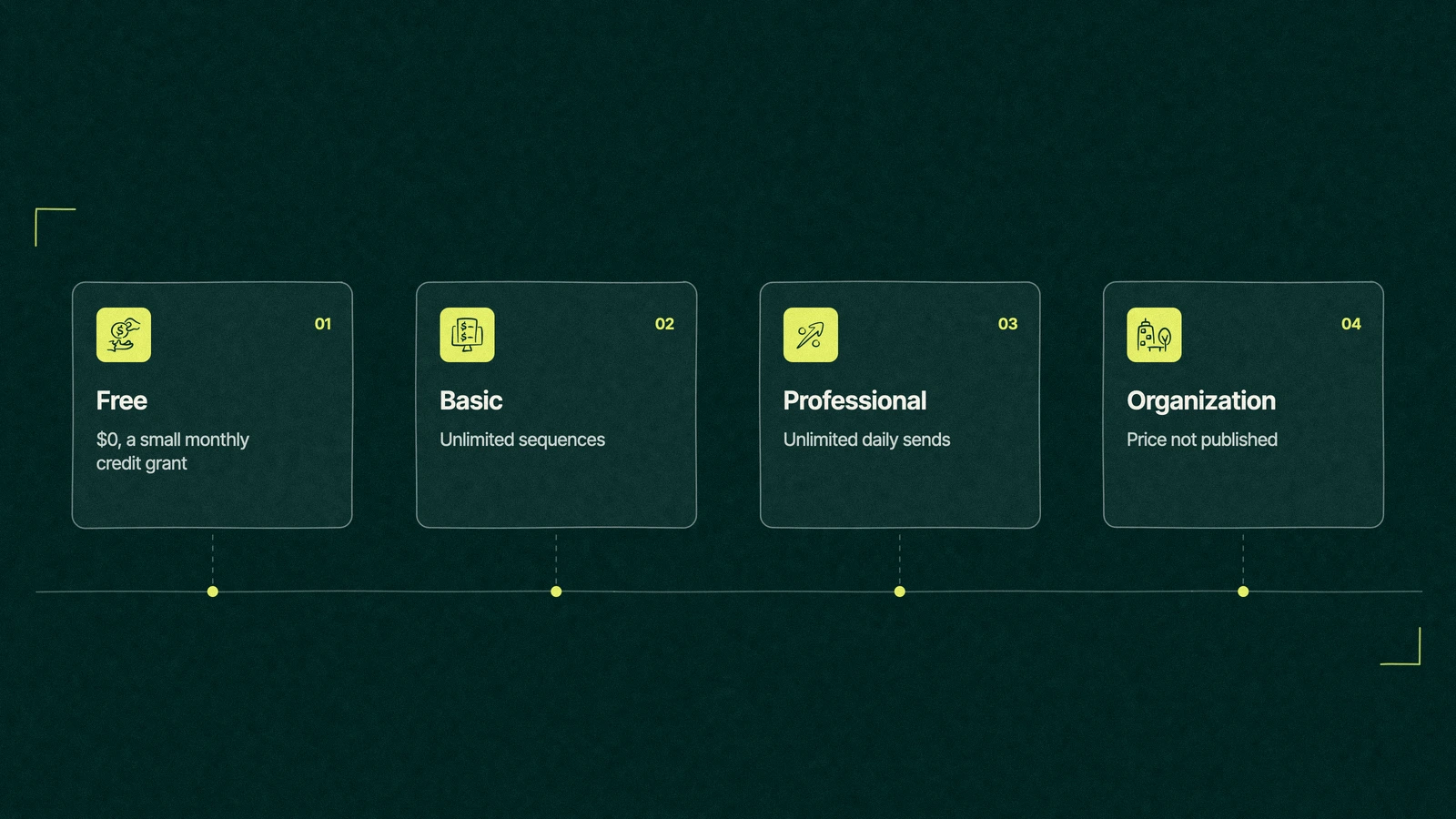
Plan
List price
Priced by
What you get
Leadfeeder Lite
$0
Free forever
The last 100 companies a month and 7 days of visitor history
Leadfeeder Discover
From $79 a month, billed annually
Companies identified each month, from up to 50
Full company profiles, real-time alerts and CRM sync
Leadfeeder Activate
From $369 a month, billed annually
Companies identified plus credits
Verified emails and phones, and intent filters
Leadfeeder Scale
From $599 a month, annual billing only
Companies identified plus credits
Company data exports and automatic CRM updates
RB2B Free
$0
150 resolutions a month
Company-level ID sent to Slack, with no person-level ID
RB2B Starter
$79 a month
300 resolutions a month
LinkedIn URLs to Slack or Teams, with no email addresses
RB2B Pro
From $149 a month
600 to 2,500 resolutions a month
Business emails and all integrations
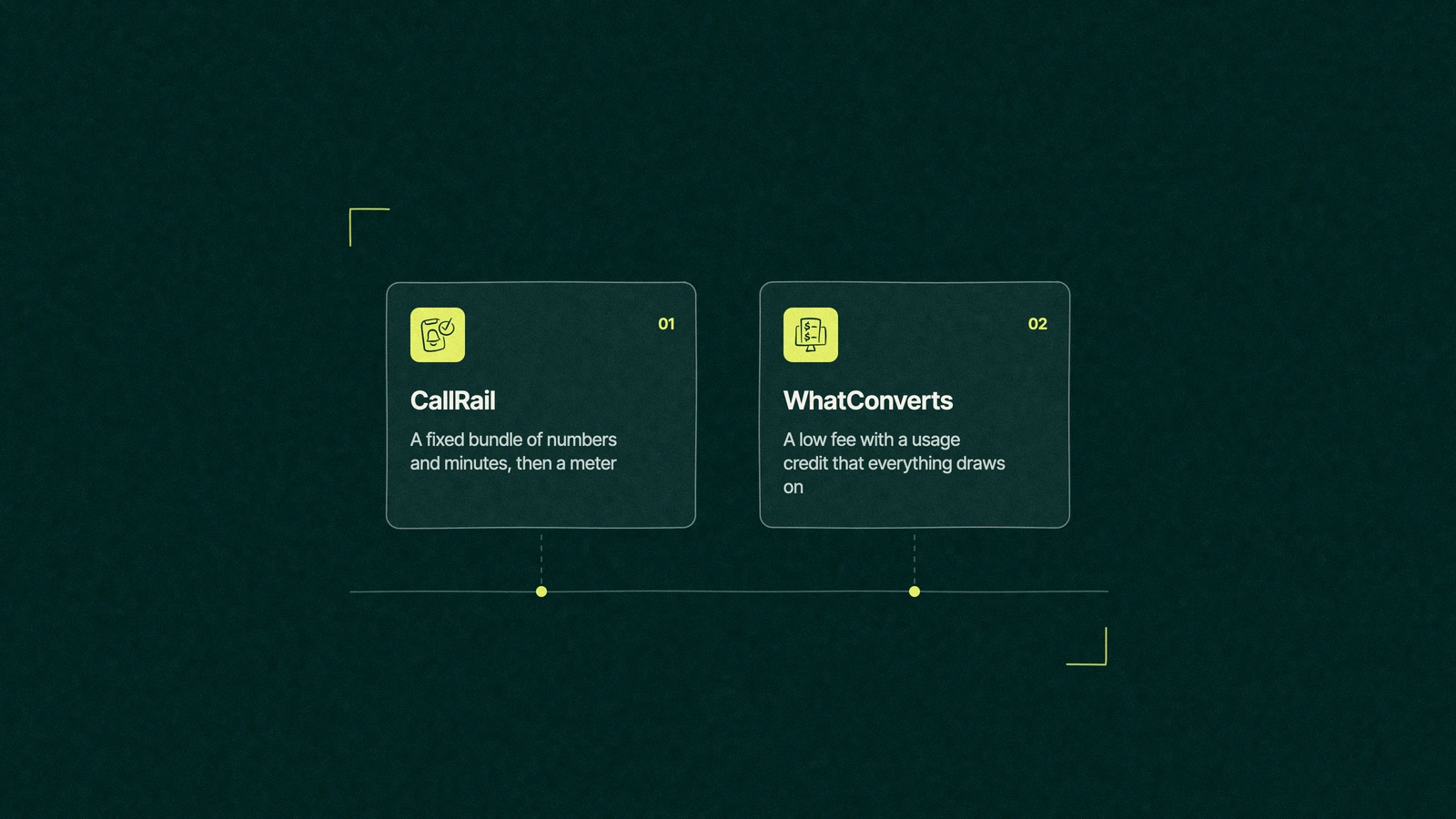
Leadfeeder counts a company once a month however many times it visits, so the tier you need depends on how many different companies reach your site. RB2B counts resolutions, which its pricing page defines as one identified website visitor delivered to you.
Leadfeeder vs RB2B, company or person
Choose by where your buyers sit and how your team sells. Leadfeeder suits account-based teams selling to several people at one company in any country, because company-level ID needs no named person.
RB2B suits US-focused teams with fast reps who want a name in Slack, and its free plan is company-level only. Some teams run one of each, but start with one and prove the rule works first.
Leadfeeder review, and why it also goes by Dealfront
The strengths in a fair Leadfeeder review are a free plan you can test on live traffic, pricing tied to companies rather than seats, unlimited users and consent settings documented in its help center. The weak spots are the 7-day history on Lite, which hides slow buyers, and the jump from Discover to Activate when you want contact details.
A Dealfront review usually covers the same product under the parent brand, so check the date on any review before you trust its prices.
Is it legal to identify website visitors under GDPR and US privacy laws?
It depends on where your visitors are and what you collect, and the vendors say so themselves. The European Commission's guide to data protection lists an IP address and a cookie ID among its examples of personal data, so under GDPR even company-level tracking handles personal data about EU visitors.
Dealfront says it processes personal data based on legitimate interest under Article 6(1)(f) of GDPR, which is the company's own position. Your legal team still decides which basis your site relies on.
Cookies need their own answer. The EU's Your Europe guidance on online privacy says a website must get consent before installing a cookie, except for cookies strictly necessary for a service the visitor asked for, and that telling visitors you use cookies doesn't count as consent.
In the US, the California Attorney General's CCPA page lists internet browsing history as personal information and gives residents the right to know, delete and opt out of the sale or sharing of their data, for businesses above set thresholds. If you sell nationally, check the rules in the other states your visitors come from.
RB2B's FAQ recommends a consent tool if you run global company-level identification, plus disclosure language in your privacy policy. This section is general information and not legal advice, so have a lawyer review your setup before you switch it on.
Website visitor identification, and a dairy fleet that came back
Three weeks after setup, the alert that mattered had nothing to do with the article. A dairy distributor with about 80 refrigerated trucks, which had sat through a demo the previous fall and gone quiet, viewed the pricing and cold chain integration pages four times in five days.
Under the rule it went to Tamsin, the rep who had lost it, with her old notes. She called the fleet manager about the temperature alerts he'd asked about a year earlier, and he said his compliance lead had wanted exactly that since a failed audit in the summer.
They signed in the last week of the quarter. Owen stopped asking who these people were and started asking how many more were on the watch list.
On install day the first of the dairy's trucks appeared on Carlos's screen as a small green dot outside a loading dock, then a second beside it. He left the map open on his desk for the rest of the afternoon.
Once you know which companies are reading your pricing page, our guide to sales prospecting tools for small teams covers how to reach the right people inside them.
Show us last month's pricing page traffic. We'll set up the alerts and write the rule your reps follow.
Trade You.
Your email for great content delivered to your inbox. Regularly. Unless we forget. Or get busy. But we'll try.
Thank you! Your submission has been received!
Oops! Something went wrong while submitting the form.
“
The first call felt like talking to someone who already understood our business. We didn’t have to explain the basics. They showed up with questions that mattered.
James L.
Director of Growth, HR tech
Client
FAQ
Frequently asked questions
Can you identify website visitors for free?
+
You can at the company level. On 27 November 2026 Leadfeeder's Lite plan showed the last 100 companies a month with 7 days of history, and RB2B's free plan gave 150 monthly resolutions at the company level with alerts in Slack. Person-level names and emails need a paid RB2B plan, and contact details need Leadfeeder Activate or higher.
How much does Leadfeeder cost?
+
Leadfeeder listed four public plans on 27 November 2026. Lite was free, Discover started at $79 a month billed annually, Activate at $369 and Scale at $599, and Enterprise was custom. Paid plans are priced by how many companies are identified each month, with credits added on Activate and Scale, and each paid plan offers a 14-day trial.
Does RB2B work outside the US?
+
Only partly. RB2B's FAQ says person-level ID is US-only technology with a US-only database, so it won't name visitors outside the US. Its company-level ID runs through a partnership with Demandbase and works globally, and RB2B suggests using a consent tool if you deploy company-level identification for visitors from other countries.
Can Google Analytics show which companies visit my site?
+
Not by itself. Google's help center says GA4 doesn't log or store IP addresses, and IP lookup is how most tools match a visit to a company. GA4 is still the best free view of traffic sources, pages and trends, so most teams keep it and add a visitor identification tool for the company names.
Do I need cookie consent for visitor tracking?
+
For EU visitors you generally do if the tool sets cookies. The EU's Your Europe guidance says sites must get consent before installing a cookie, unless it's strictly necessary for a service the visitor asked for. Leadfeeder can run without its cookie when consent is refused and still identify the company. Check your own setup with a lawyer.
Written by
The Leapyn team
Senior marketers who run strategy, creative and demand gen for B2B companies. We write about what’s working for our clients right now.