Apollo.io pricing explained, with a credit budget and when to upgrade
What each Apollo plan costs monthly and yearly, what a credit buys, how to work out the credits your team needs and which features make the next plan worth it.
Lead generation
The Leapyn team
November 28, 2026
10 min read
In this post
toc
On the 18th of the last month of the quarter, Keisha Lam's three sales reps hit the same message in Apollo within an hour of each other, and her owner's first question was why the free tool needed a bigger plan. Apollo.io pricing hadn't changed since the team moved off the free plan in the summer. What had changed was how fast her reps were spending credits.
Keisha leads sales at a commercial cleaning company, and the push that quarter was office buildings, where one signed property manager can mean four buildings and a year of night crews. Twelve working days were left, and two of the warmest prospects were still waiting on a second email.
She asked for a day before anyone bought anything, and she came back with a smaller number than the owner expected.
One link in this post is a partner link, so Apollo may pay us if you sign up through it. We only list tools we've tested, and the commission never buys a better spot.
What does Apollo.io pricing include?
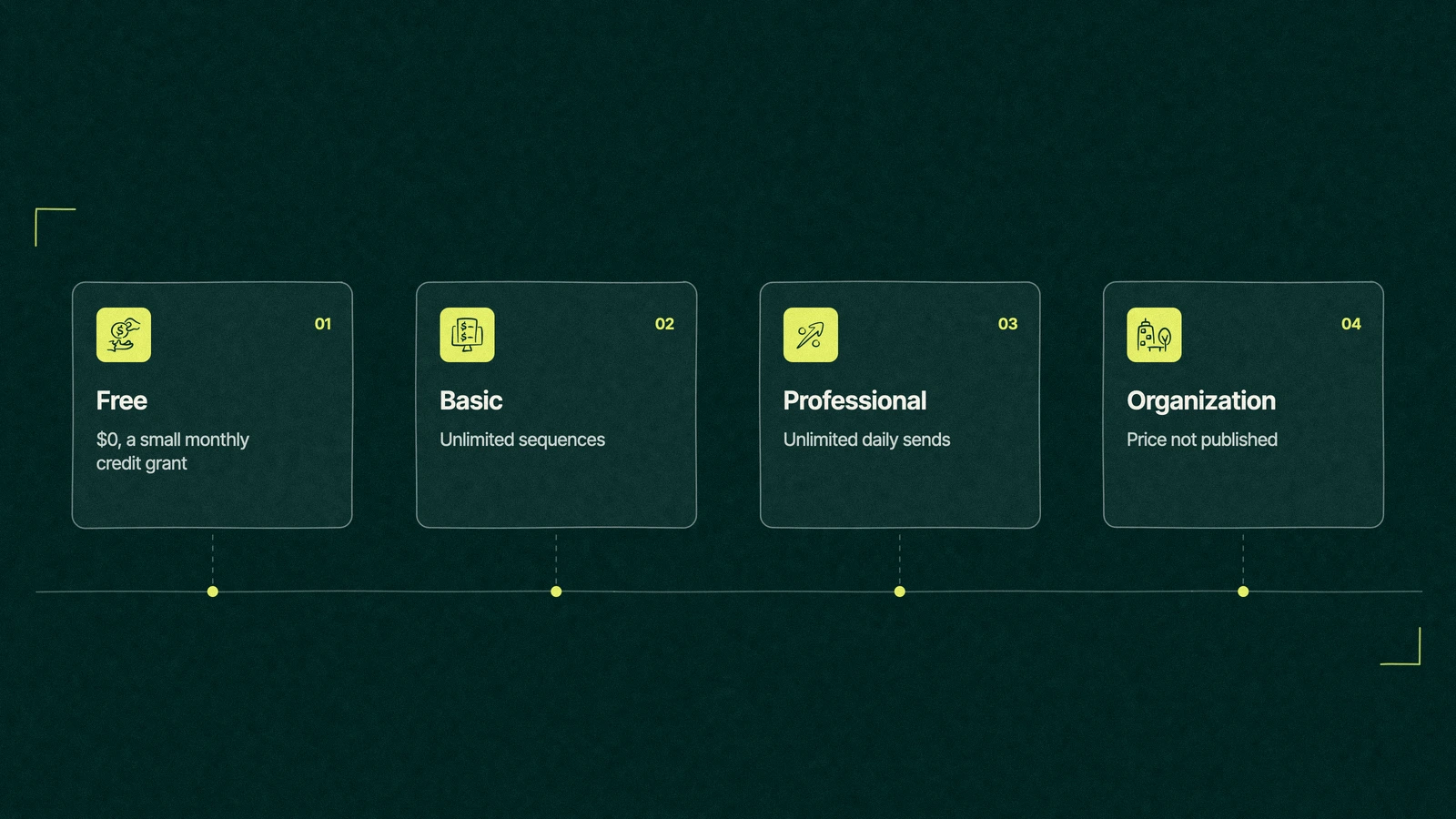
Apollo.io pricing has four plans. Free costs nothing, Basic is $49 a seat a month billed yearly or $59 monthly, Professional is $79 yearly or $99 monthly, and Organization is quoted. Every plan comes with credits, which you spend to reveal emails and phone numbers, and the plan sets which outreach features you get.
Those are list prices from the Apollo pricing page (partner link) on 27 November 2026, before tax. The page notes that pricing is introductory and can change, so check it before you buy.
The seat price is the easy part. The credits decide whether you run out on the 18th or finish the month with some left, so most of this guide is about them.
Apollo.io pricing by plan, monthly and yearly
The table shows each plan as Apollo's pricing page listed it on 27 November 2026, with both billing toggles. Yearly billing is paid up front for twelve months.
Plan
Billed yearly
Billed monthly
Credits
What you get
Free
$0
$0
1,200 a seat a year, granted monthly, or 100 on the monthly view
2 sequences, basic filters, 25 record selection limit, Gmail only, 250 sends a day
Basic
$49 a seat a month
$59 a seat a month
30,000 a seat a year up front, or 2,500 a month
Unlimited sequences, advanced filters, warmup and deliverability tools, CRM integrations, 1 mailbox per user, 250 sends a day
Professional
$79 a seat a month
$99 a seat a month
48,000 a seat a year up front, or 4,000 a month
A/Z testing, AI lead scoring, unlimited daily sends, unlimited Google and Microsoft mailboxes, 4,000 minutes of call recording, reports
Organization
Not published
Yearly only
Custom
SSO, custom reports and dashboards, 12 intent topics, advanced security
Two rules further down the Apollo.io pricing page shape the bill. All seats on an account share one plan, so you can't put one rep on Professional and two on Basic, and credits are pooled across the team, so a heavy user can drain everyone's balance.
Keisha's team was on three Basic seats billed monthly, which is $177 a month at list price and, on the page's figures, 7,500 credits in the shared pool each cycle. The owner still called it the free tool, because that's how it had arrived.
How Apollo credits work, and where they go
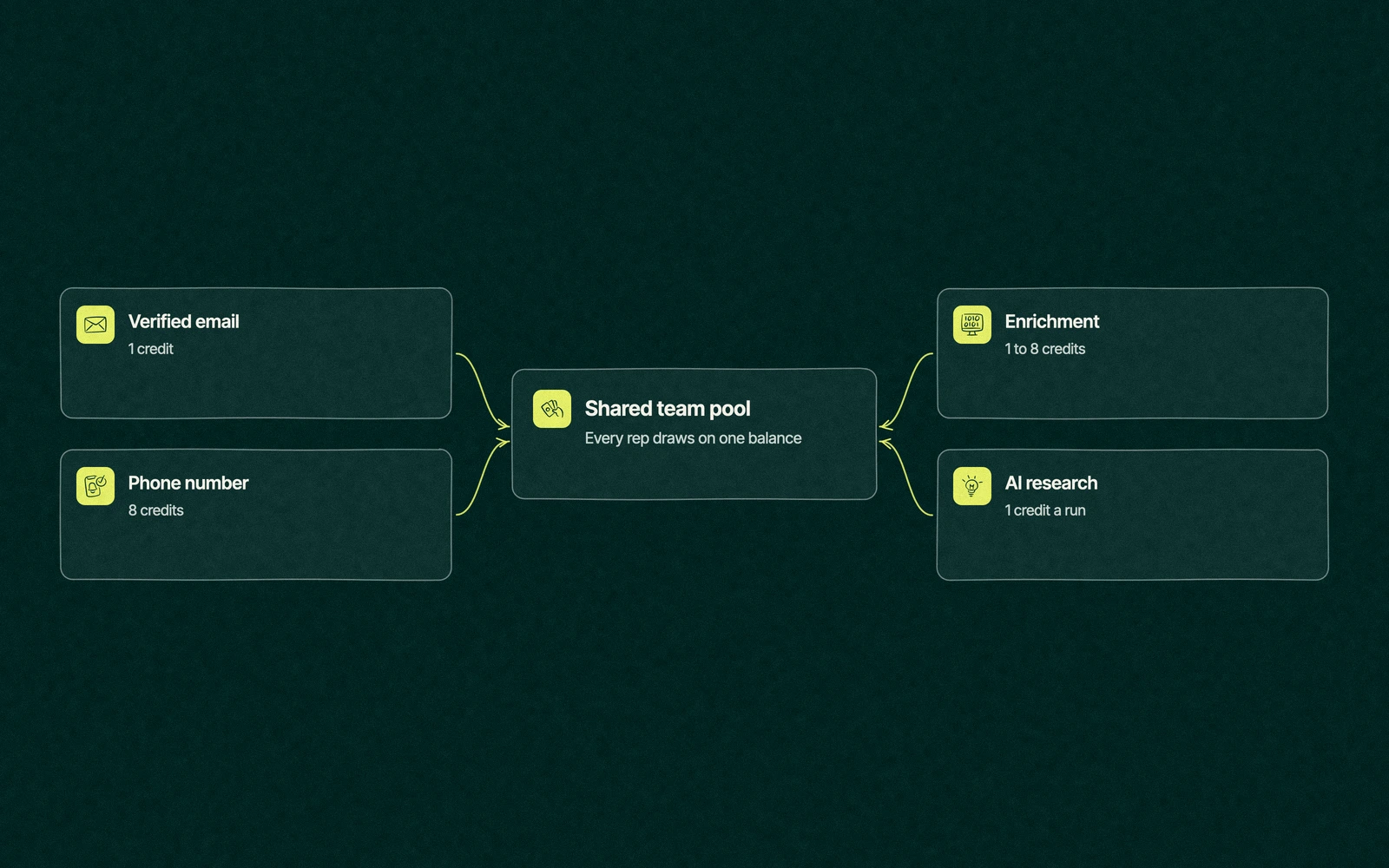
Apollo credits are one currency spent at different rates. Older reviews describe separate export, mobile and data credits, but on 27 November 2026 the pricing page listed a single pool with these costs.
A verified email costs 1 credit. Apollo says it never charges more than 1 credit per contact for email and only charges for addresses it can verify.
A phone number costs 8 credits. That covers mobile, direct and office extensions, so one phone reveal costs as much as eight emails.
Enriching data costs 1 to 8 credits. This is filling in missing fields on contacts and companies already in your CRM or a CSV.
AI research costs 1 credit a run, and the US dialer costs 1 credit for every 30 seconds of calling.
Credits arrive at the start of each billing cycle and expire at the end of it, including any extra credits you buy. If you run out mid-cycle, the FAQ points you to a slider under Settings, Manage Subscription, Customize Credits, and those add-on credits are charged right away and renew every cycle until you drag the slider back to zero.
An Apollo credits audit, and where 7,500 went by the 18th
Apollo's FAQ says Settings, then Credit usage, filters spending by date, credit type and user. Keisha ran it for the cycle and found three leaks, none of them a pricing problem.
The first was phone numbers. One rep revealed a number for every contact he saved, out of habit from a previous job, and phone reveals at 8 credits each had eaten about two thirds of the pool. Most of those numbers belonged to people nobody had called.
The second was contacts revealed and never emailed, more than 800 of them, sitting in lists for buildings the team hadn't reached yet. The third was overlap, with two reps working the same property management firms and revealing different facilities staff at each, when one regional manager signs for every building.
Apollo.io pricing math for a three rep team
Keisha rebuilt the month from what the team would use, which is the sum to do before Apollo.io pricing tempts you into a bigger plan.
Each rep emails about 20 new contacts a working day, so three reps across 21 working days need roughly 1,260 email credits. If phone numbers are revealed only after a reply or for a planned call block, about 40 a rep comes to 120 numbers, or 960 credits. Add 15% for bad fits and the month needs about 2,550 credits, which is a third of the 7,500 the team was already paying for.
The quarter-end push still needed more than what was left. Twelve days of the plan above came to about 1,450 credits, so she added that much on the slider for one cycle, put a reminder on the renewal date to set it back to zero and left the plan on Basic.
Is Apollo worth it, and when to upgrade
Apollo is worth it for a small team that emails first, keeps its target list tight and watches credits weekly. It stops being worth it when reps reveal everything they find, because the shared pool turns one person's habit into everyone's problem.
Upgrade for a feature, not for credits. At the prices Apollo listed on 27 November 2026, buying extra credits on the plan you have is usually the cheaper fix. These are the limits that make the next plan pay for itself.
Free to Basic when you need more than 2 sequences, more than 25 records in one selection, Outlook or another provider instead of Gmail, or CRM sync.
Basic to Professional when 250 sends a day isn't enough, reps need several mailboxes each, or you want A/Z tests, AI lead scoring and call recording with insights.
Professional to Organization when security asks for SSO, leadership wants custom dashboards or you need more intent topics.
Remember that every seat moves together. Three seats from Basic to Professional on monthly billing is $120 more a month at list price, so make sure all three reps will use what you're paying for.
How to use Apollo.io without burning credits
A tidy setup in the first week saves more than any plan change. This is the order that keeps credits for the contacts who'll hear from you.
Connect a mailbox on a separate sending domain. Keep cold email off the domain your quotes and support replies come from, and use the warmup tools on paid plans before the first send.
Save your target search before revealing anyone. Filter by industry, headcount, location and title, then save it, so every rep works the same definition of a good account.
Reveal emails only for this week's sequence. A contact revealed in March and emailed in June has cost a credit and gone stale in the meantime.
Reveal phone numbers only after a reply or for a planned call block. At 8 credits each, this one rule did more for Keisha's balance than anything else.
Assign accounts to one rep each. Split the saved list by account owner, so two people never prospect the same company in the same month.
Check credit usage every week and set per-user caps. The FAQ says admins can cap each user's share of the pool, which stops one habit from emptying it.
Apollo.io cold email, and the rules to read first
Apollo will send whatever you load into a sequence, so deliverability is your job. Google's email sender guidelines ask every sender to set up SPF or DKIM and keep spam rates reported in Postmaster Tools below 0.3%, with a recommendation to stay under 0.1%.
Anyone who sends Gmail users over 5,000 messages a day also needs DMARC and one-click unsubscribe. A small team rarely hits that volume, but the habits are worth having from the first send.
The law applies to business email too. The FTC's CAN-SPAM guide says there is no exception for business-to-business email, opt-outs must be honored within 10 business days, every message needs a valid postal address and each violating email can cost up to $53,088.
Apollo.io review, one cycle after the 18th
The owner read Keisha's one-page audit, approved the one-cycle top-up and asked why nobody had looked at the credit report before. She didn't have a good answer, so she added it to the team's weekly check-in, where it now takes ten minutes.
The team signed two property managers before the quarter closed, one of them for three buildings. The rep with the phone habit now reveals numbers after replies, and the next cycle ended with more than half the pool unspent, which Keisha mentioned to the owner only once.
The add-on slider has sat at zero since the renewal date. Under it in the settings, the per-user caps show three equal numbers.
Our lead generation agency team sets up target lists, sending domains and email automation that keep credits for people who'll reply. Send us last month's credit report. We'll tell you where it went and what plan you need.
Trade You.
Your email for great content delivered to your inbox. Regularly. Unless we forget. Or get busy. But we'll try.
Thank you! Your submission has been received!
Oops! Something went wrong while submitting the form.
“
The first call felt like talking to someone who already understood our business. We didn’t have to explain the basics. They showed up with questions that mattered.
James L.
Director of Growth, HR tech
Client
FAQ
Frequently asked questions
What is Apollo.io pricing per user?
+
On 27 November 2026, Apollo listed Basic at $49 a seat a month billed yearly or $59 billed monthly, and Professional at $79 billed yearly or $99 billed monthly. The Free plan costs nothing, and Organization pricing isn't published. Prices exclude tax, every seat on an account must be on the same plan, and the page says its pricing is introductory and may change.
Is Apollo.io free to use?
+
Yes, there's a free plan with no time limit, and email campaigns are included. It comes with a small credit allowance, 2 sequences, basic filters and Gmail only, so it suits a founder testing outreach more than a team selling every day. Paid plans also offer a 14-day trial, with 100 trial credits listed on 27 November 2026.
Do Apollo credits roll over?
+
No. Apollo's pricing FAQ says unused credits expire at the end of each billing cycle and don't carry over, and that includes extra credits you bought on top of the plan. Yearly plans grant their credits up front at the start of the year, so pace them, because a team that spends heavily in spring can find the pool empty by autumn.
Is Apollo worth it for a small sales team?
+
Usually, if the team emails first, works a defined target list and checks credit usage each week. It's less of a bargain when reps reveal phone numbers for every contact, since each one costs 8 credits from a shared pool. Work out the credits you need from daily outreach before you buy, then pick the plan for its features rather than its credits.
Can you mix Apollo plans across a team?
+
Not on one account. Apollo's FAQ says all seats sit on the same plan, so the plan your heaviest user needs is the plan everyone pays for. If one rep needs more credits, a top-up through the credit slider is usually cheaper than moving every seat up, and admins can set per-user caps so the shared pool lasts the whole cycle.
Written by
The Leapyn team
Senior marketers who run strategy, creative and demand gen for B2B companies. We write about what’s working for our clients right now.