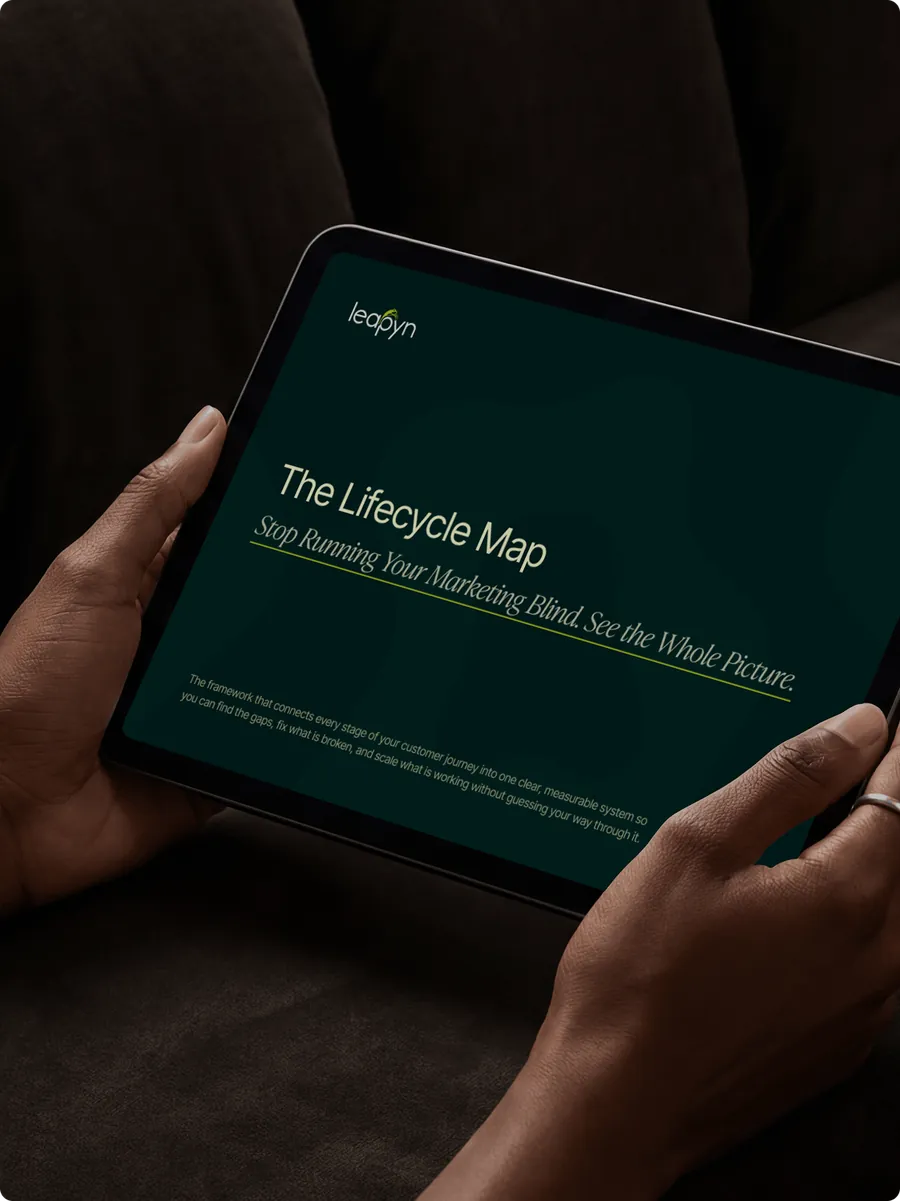
AI overviews, social algorithm changes, and platform-native content are permanently reshaping how people discover and evaluate businesses.
Key findings
68% of US Google searches ended with zero clicks in early 2026, according to SparkToro. AI overviews answer the question before anyone reaches your site.
Businesses investing in owned audiences are growing revenue while those still chasing organic search traffic are watching it shrink quarter over quarter.
Zero click doesn't mean zero visibility. It means building trust on the platform where your audience already is, so when they're ready to buy, your name is the one they already know.
Organic clicks are disappearing
More than two thirds of US Google searches now end without a single click. SparkToro's 2026 zero click study measured 68.01 percent from January to April 2026 using Similarweb clickstream data, up from 60.45 percent in 2024. Social platforms keep posts with outbound links on a short leash, and AI overviews answer the question before anyone reaches your website.
The zero click era is here, and most businesses are still running a marketing plan built for a world where the click was guaranteed. This guide covers what is happening to organic search traffic and social reach, and gives you a zero click marketing strategy that brings in revenue without depending on clicks that aren't coming back.
What is zero click marketing?
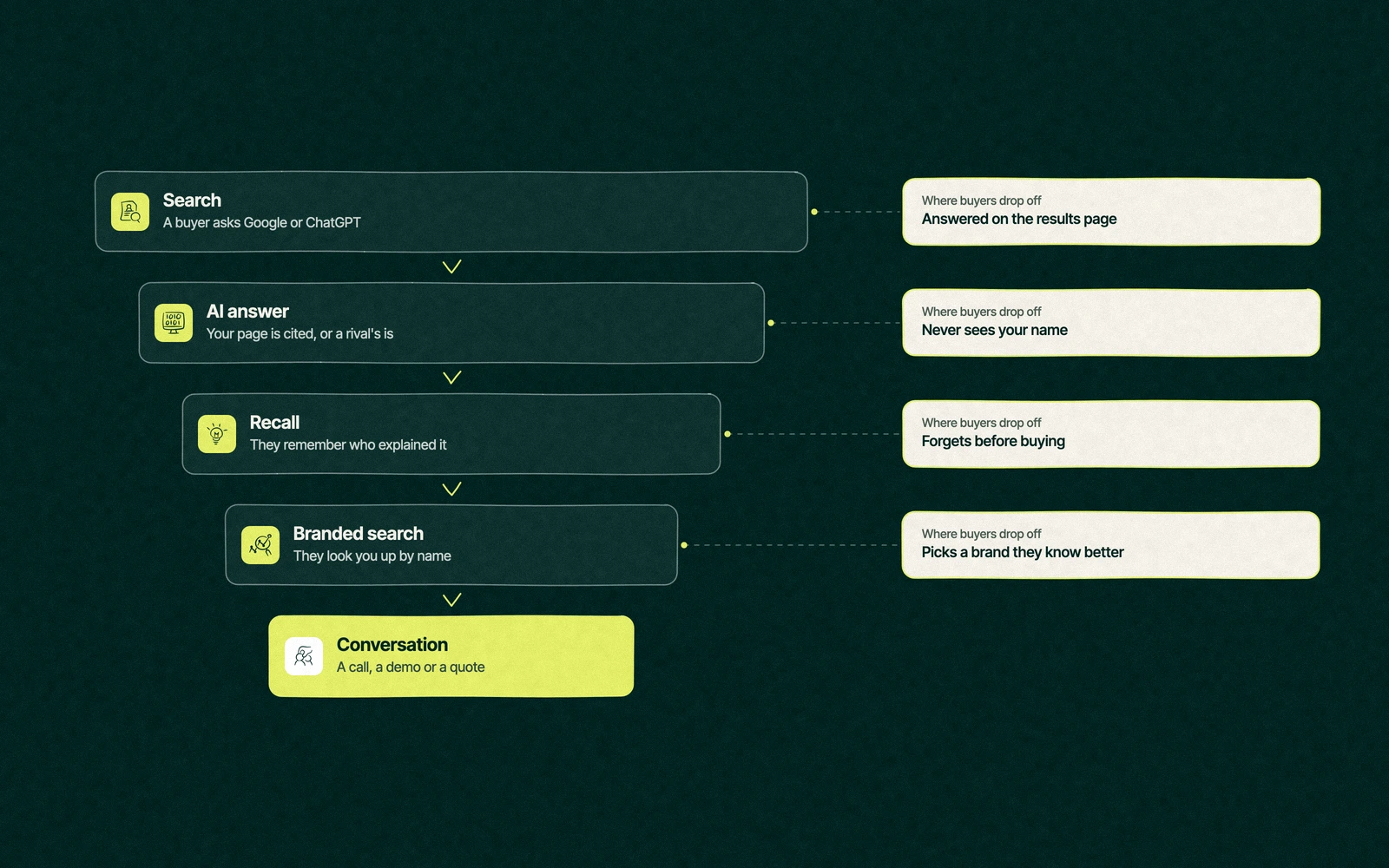
Zero click marketing is the practice of giving buyers your answer, your proof and your name right where they already are, in an AI overview, a featured snippet, a LinkedIn post or a short video, without asking them to visit your website first. The goal is recall, so when they're ready to buy, they search for you by name.
The old model treated every post and page as bait for a click, and anything that didn't send traffic counted as a loss. Zero click marketing counts the post itself as the work. The value lands on the platform, and the click, when it comes, belongs to a buyer who already trusts you.
That shift sounds small until you look at your reporting. A plan judged on sessions will keep cutting the channels that build recognition, because those channels rarely show up as visits.
How do zero click searches work?
A zero click search ends on the results page. Google shows the answer itself, the searcher gets what they needed, and no website gets the visit. It happens most in four places.
AI overviews. A summary sits above the links and answers the question in a few lines. In Pew Research Center's study of Google AI summaries, users clicked a traditional result in 8 percent of visits where a summary appeared, against 15 percent when none did, and clicked a link inside the summary in about 1 percent of visits.
Featured snippets and knowledge panels. Definitions, dates, conversions and company facts come back as a box at the top, so quick factual questions rarely need a click.
Map packs. Local searchers call, get directions or read reviews straight from the listing, which is why a complete Google Business Profile can matter more than the website behind it.
Refined searches. Plenty of searchers rephrase instead of clicking. Semrush's zero clicks study found that 27.6 percent of US desktop searches were refined into a new query in its May 2022 sample.
Why the zero click numbers disagree
Estimates swing because studies count different things. Semrush put zero click searches at 25.6 percent of US desktop searches in 2022 and treated refined searches as their own group, while SparkToro counts every search that ends without a click to any website.
The direction is the same either way. SparkToro's 2020 study with SimilarWeb data put the share at 64.82 percent, which is where the often quoted "65 percent" comes from, and its 2026 numbers are higher still. Pick one source, track it over time, and stop arguing about the decimal.
Social feeds work the same way
Search isn't the only place clicks are drying up. LinkedIn, Instagram, TikTok and YouTube all want people to stay in the app, so the post that teaches in the feed gets read while the link at the bottom mostly gets ignored.
That changes what a good post looks like. The idea, the proof and your name all have to fit inside the post, because for most readers the post is the only part of you they'll see this week.
Five strategies that work when organic traffic doesn't
The full guide covers the three forces killing clicks across search and social, five strategies that bring in revenue without relying on organic traffic, and how to measure brand visibility when clicks stop being the leading indicator.
Answer the question where it gets asked
Write each page so the answer sits in the first two sentences under a heading that matches the question. Add FAQ markup, use tables for comparisons and keep your business details identical everywhere they appear. Our answer engine optimization guide covers how pages get cited, and our SEO and AEO services team does the work if you'd rather not.
Post the whole idea, keep the link for later
On LinkedIn, a post that teaches the whole idea in the feed gives readers a reason to remember you, while a teaser asks for a click most of them will never make. Give away the method, the numbers and the example, then let the people who want more find you. Our social media marketing team builds programs on that rule.
Build an audience nobody can throttle
An email list and a LinkedIn following are the two audiences an algorithm update can't take away overnight. Give people a reason to subscribe that has nothing to do with a discount, and send something worth opening every week. The email automation and nurture side keeps that list warm without someone writing every send by hand.
Make your name the thing they search
When buyers see you in an AI answer, a podcast clip and a colleague's post in the same month, they search for you by name. Branded search is the click zero click marketing is really after. Short video, a clear point of view and a brand strategy people can repeat in one sentence all make the name stick.
Turn recognition into conversations
Visibility only pays when someone acts on it. Retarget the people who engage with your posts, offer a useful next step on every page that still gets traffic, and make booking a call easier than leaving. Our guide to lead generation in digital marketing covers the channels that turn attention into contacts.
What should you measure when clicks go down?
Sessions and click through rate will keep falling for informational searches, and that alone doesn't mean your marketing is failing. Track the signals that show whether more buyers know your name, then tie them to pipeline.
What to track
Where to find it
What it tells you
Search impressions
Google Search Console, Performance report
How often you appear, including searches that end on the results page
Branded searches
Search Console queries that contain your name
Whether more people look you up by name after seeing you elsewhere
AI answer citations
Logged out prompts in ChatGPT, Perplexity and Google AI overviews, checked monthly
Whether AI tools name you when buyers ask about your category
Direct traffic
Your analytics tool, filtered to direct visits
People who typed your address because they already knew it
How did you hear about us
A free text field on your forms and a question on sales calls
The posts, videos and answers that never show up as a click
Owned audience growth
Email subscribers and followers in your CRM and social tools
How many buyers you can reach without asking an algorithm
Pipeline by first touch
Deal source and first touch fields in your CRM
Whether all that visibility turns into sales conversations
Set a baseline before you change anything. Export three months of Search Console impressions and branded queries, log your first round of AI prompts, and add the "how did you hear about us" field this week, so next quarter's comparison means something.
None of these replaces revenue as the number that matters. They tell you early whether the work is landing, months before it shows up in closed deals. If your CRM can't report first touch yet, our HubSpot reporting work starts there.
What does zero click marketing look like in practice?
These are the patterns we see work across industries, written as examples rather than case studies.
A local HVAC company fills out every field of its Google Business Profile, posts photos of finished jobs each week and answers every review. Calls come straight from the map listing, and the website becomes the place people check prices after they've already decided.
A B2B software founder posts the full teardown of a failed launch as a LinkedIn document, with no link in the post. Prospects mention it on discovery calls weeks later, and the "how did you hear about us" field starts naming the founder.
A consulting firm rewrites its guide pages so each heading is a question and the first two sentences answer it. The pages start showing up as sources in AI overviews for its core service terms, and branded searches rise even while sessions to those pages fall.
A manufacturer turns one trade show talk into a dozen short clips for LinkedIn and YouTube. Buyers who never visited the booth watch the clips, and sales starts hearing the product name before the first call.
We wrote the full guide because we kept hearing the same thing from founders. Traffic is down, ads are more expensive, and nobody can figure out why the playbook that worked two years ago isn't working anymore. This is the answer.
No. The same pattern runs across LinkedIn, Instagram, TikTok and YouTube, where people read, watch and decide without leaving the app. A zero click plan covers every place your buyers spend attention, so the post, the video or the AI answer carries the full idea and your name, whether or not anyone clicks through to your site.
What is a zero click search?
A zero click search is one where Google answers the question on the results page, through an AI overview, a featured snippet, a map listing or a knowledge panel, so the person never visits a website. It's common for quick factual questions and for local searches, and it's growing as AI answers cover more topics.
Does zero click search mean SEO no longer works?
No. SEO still brings visitors for searches where people want to compare, buy or go deeper, and those clicks tend to be the most valuable ones. What changes is the goal for informational searches, where being cited in the AI answer and building recognition for your brand matters more than the click.
How do you win in a zero click search market?
Answer the questions your buyers ask in clear sections with a direct answer near the top, add FAQ schema so search engines and AI tools can read the answers, and keep your business details consistent across the web. At the same time, build audiences you own, such as an email list and a LinkedIn following, so you can reach buyers without depending on search traffic.
How do you measure marketing when organic clicks go down?
Track impressions and branded searches in Google Search Console, mentions of your brand in ChatGPT, Perplexity and Google AI overviews, direct traffic and the answers to "how did you hear about us" on your forms and sales calls. Together they show whether more buyers know your name, even when fewer of them click.
Get the full report.
Thank you! Your submission has been received!
Oops! Something went wrong while submitting the form.