Services
StrategyPlans, positioning, leadership›GrowthAds, search, email, social›Creative and webBrand, websites, content, video›OperationsHubSpot and revenue operations›Property marketingRendering to signed lease›Creative and web
All services →Strategy, creative and execution, all in house.
See pricing →Every channel, one team, weekly results.
See pricing →Work that ships weekly and looks like you.
See pricing →Every channel, one team, weekly results.
See pricing →Different buildings. Same obsession with leases.
See pricing →Industries
Real EstateIndustrial, commercial, residential›SaaS and technologyHR tech, EdTech, FinTech, PropTech›Home servicesHVAC, roofing, plumbing, electrical›Professional servicesLaw, accounting, advisors, recruiting›VC and private equityPortfolio and fund marketing›Real estate marketing
Overview →Services for every building
SaaS and technology marketing
Overview →Who we work with
What we run for them
Home services marketing
Who we work with
What we run for them
Professional services marketing
Overview →Who we work with
What we run for them
Different buildings. Same obsession with leases.
Pricing and packages →Different products. Same obsession with pipeline.
All SaaS and technology work →Different trades. Same obsession with booked jobs.
All home services work →Different practices. Same obsession with signed clients.
All professional services work →Company
About usThe team behind LeapynHow we workWeekly delivery, one teamWhy LeapynWhat we mean by differentCase studiesResults with the numbersContactSay helloMarketing that earns its keep.
Book a call →Learn what is working before you spend on it.
All insights →Services

Marketing strategy
Growth marketing
Paid advertising
Creative and web
Operations
Property marketing
Industries
Real estate marketing
Services−Company
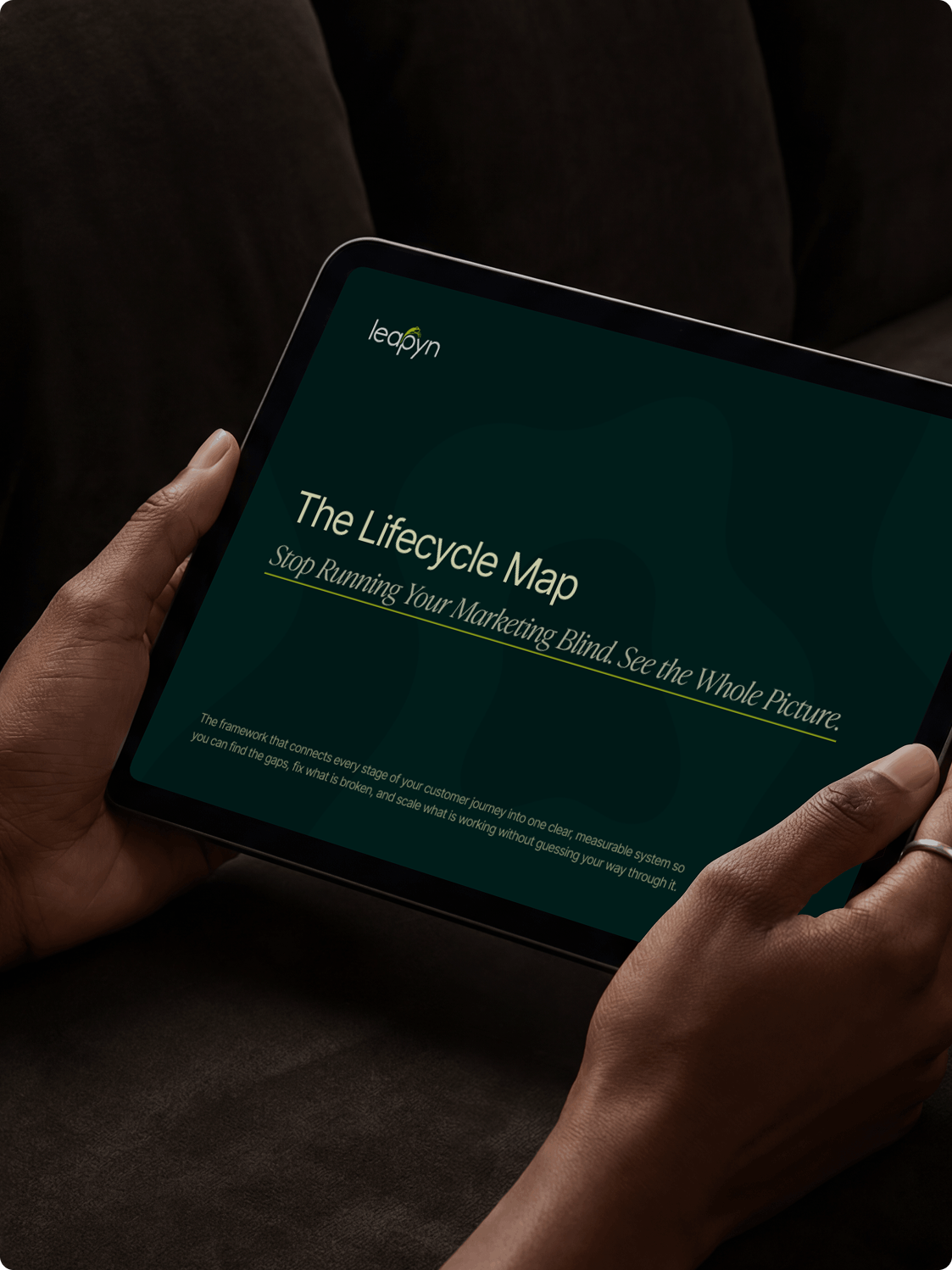
Map every stage of your customer lifecycle from first touch to referral.
Key findings
The conversion rates between stages tell you where the actual bottleneck is, and most businesses have never looked at them.
Marketing says the leads are good. Sales says they are not. A shared customer journey framework with agreed definitions at each stage eliminates that argument permanently.
Your paid ads might be driving traffic to a landing page that is not converting. This framework makes those disconnects impossible to miss.
The framework breaks down every customer lifecycle stage from awareness through advocacy with guidance on what to measure, the conversion rate benchmarks between stages that act as your bottleneck detector, and a full lifecycle mapping workshop you can run with your team.
We built this because every client conversation started the same way. Marketing was running, money was being spent, but nobody could show how all the customer touchpoints connected or where the biggest opportunity was hiding.
A customer lifecycle map shows every stage a buyer goes through with your company, from first hearing about you to buying, renewing and referring others. For each stage it lists the touchpoints, who owns them in marketing, sales or customer success, and the number that tells you whether the stage is working.
A common model uses five stages, which are reach, acquisition, conversion, retention and loyalty. Our framework splits the journey into seven stages, from awareness through advocacy, so the handoff between marketing and sales and the time after the first purchase each get their own stage and their own numbers.
Start by naming the stages and agreeing with sales on what moves a buyer from one stage to the next. Then list the touchpoints at each stage, pull the conversion rate between every pair of stages from your CRM and find the biggest drop. That drop is where your next marketing dollar or sales fix should go.
A customer journey map usually follows one buyer's experience through a single purchase, including what they think and feel at each step. A customer lifecycle map covers the full relationship, including renewal, expansion and referrals, and ties each stage to a metric your team reports on.
A customer lifecycle strategy plans the marketing and sales work for each stage instead of putting most of the budget into getting new leads. It sets a goal for every stage, such as more qualified meetings or higher renewal rates, and assigns campaigns, content and owners to reach it.

Sent instantly by email
Free download
Actionable insights
Here is your resource!
Download the customer lifecycle map (PDF).
More resources
See all resources →